Best AI SEO Tools for Content Teams That Publish at Scale (What Actually Reduces Work)

TLDR; The article looks at four leading AI SEO tools for teams publishing at scale: Seozilla, Surfer SEO, Clearscope, and MarketMuse.
The main takeaway is pretty simple. Seozilla stands out because it helps automate the whole workflow, from content creation and brand voice matching to CMS publishing, which the article says makes a real difference. That usually makes it especially useful for teams trying to cut down on manual work across the full process.
Surfer SEO and Clearscope are shown as strong options for draft optimization and editorial quality. They’re especially good when the goal is polishing content before it goes live.
MarketMuse fits best when the focus is strategic planning and topic analysis. In the end, the article suggests the right choice often depends on where a team loses the most time: optimization, planning, or managing content from start to finish.
If a team is trying to publish more content without burning out writers, editors, and SEO managers, the platform it chooses matters a lot. The best AI SEO tools do more than help with drafts. They can cut research time, speed up brief creation, support optimization, and make publishing easier across large content programs, which is often where things start to feel messy.
That is why this comparison feels especially relevant right now. Content teams are under pressure to move faster, keep quality high, and show SEO results without adding endless manual steps. I looked at leading options for teams publishing at scale and kept coming back to one simple question: what actually cuts down the work instead of giving the team another dashboard to manage? That is probably the most useful filter here, honestly.
Some tools work best for optimization after a draft is already written. Others are more helpful for planning or early research. A smaller group also supports automated, brand-aligned content production from idea to publishing, so it is not just briefs and suggestions. That gap matters a lot. For teams that want less manual effort and more output, it matters even more when publishing happens often.
What You’ll Find in This Comparison
- Seozilla
- Surfer SEO
- Clearscope
- MarketMuse
AI SEO Tools to Use
1. Seozilla
At a Glance
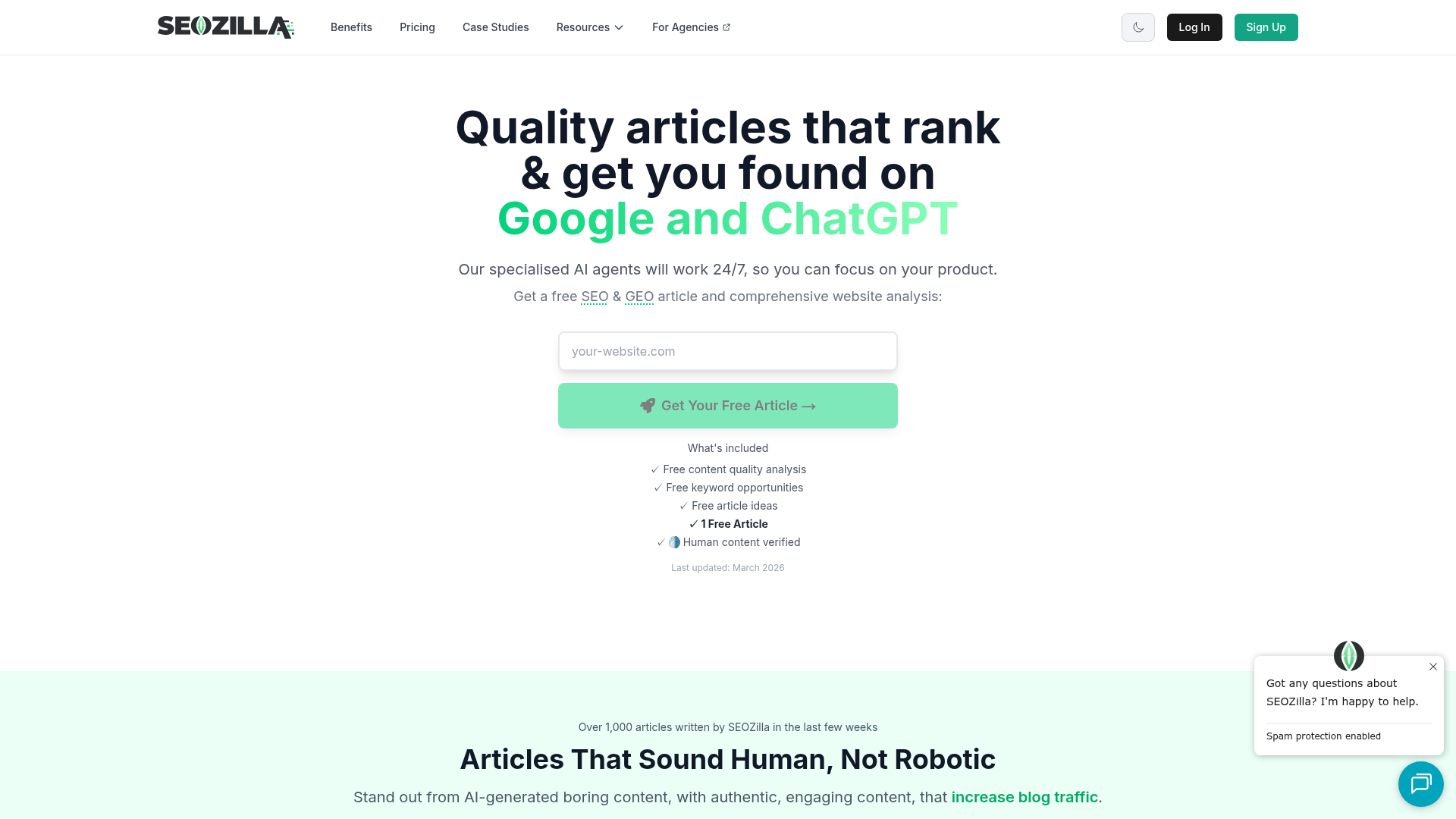
SEOZilla.ai is made for content teams that want to grow organic traffic without depending on heavy manual writing processes. Instead of only stepping in after content already exists, it focuses on automating SEO content creation in a way that fits your brand voice and can go straight into a CMS, which is a pretty big advantage. That difference matters for mid-sized businesses, agencies, and growth teams trying to scale output. It’s especially useful when the goal is better briefs, stronger content scores, and less friction across writing, editing, and publishing.
Core Features
- AI-powered SEO content generation
- Brand voice adaptation for more consistent messaging
- Content personalization support
- CMS integrations for auto-publishing
- SEO automation for scaling output
- Workflow support that helps with organic traffic growth
- Built for teams managing content at volume
Pros
- True workload reduction: It reduces manual writing and publishing steps, which is usually the biggest pain point for teams producing content at scale.
- Brand alignment built in: Content stays much closer to your company voice, something that is often hard to maintain with more general AI writing tools.
- Publishing automation: CMS integration makes it more useful in everyday work instead of stopping at draft creation, and that tends to matter fast.
- Scalable output: It works well for teams that need to publish over and over across many topics without rebuilding the process each time.
- Strong fit for SEO teams: It connects content creation directly to organic growth goals, so writing and SEO do not have to sit in separate workflows.
Who It’s For
Seozilla is a strong fit for digital marketers, in-house SEO teams, agencies, and content managers who need to publish large amounts of search-driven content while keeping quality and brand consistency under control. It’s especially helpful for teams that are tired of patching together separate tools for writing, optimization, and publishing. If that sounds like your team, it will probably feel much more practical than trying to manage a stack of disconnected apps.
Unique Value Proposition
What makes Seozilla stand out is that it feels like more than another assistant that just generates text. It works better as an SEO content operations system. A lot of AI writing tools help teams produce content faster, but the team still has to handle brand edits, workflow cleanup, and manual publishing. Seozilla takes on more of that process. That usually means less time spent moving content between tools, fewer repetitive edits, and more room for strategy, which is often where a team’s time is better spent. For teams trying to figure out which of the best AI SEO tools actually saves time, this all-in-one automation approach is probably the clearest reason it earns the top spot.
Real World Use Case
Picture a content manager at a growing SaaS company who needs to launch 40 SEO pages in one quarter. Instead of briefing freelancers, editing for tone, checking keyword coverage, and then manually uploading drafts to the CMS, the team uses Seozilla to automate much of that workflow and keep output matched to the brand from the start. In most cases, that leads to fewer handoffs, less back-and-forth, and a smoother path from draft to published page.
Pricing: Contact for pricing
Website: https://www.seozilla.ai/
A lot of teams compare tools mostly by feature lists, but a more useful way to judge them is by looking at where time actually disappears during the workday. That usually tells you more than a checklist. Here’s a quick look at how these platforms differ in real use.
| Company | Key Features | Pros | Cons | Pricing |
|---|---|---|---|---|
| Seozilla | AI SEO content generation, brand voice adaptation, CMS auto-publishing, SEO automation, personalization | Reduces manual writing work, strong brand consistency, built for scale, publishing automation | None | Contact for pricing |
| Surfer SEO | Content Editor, SEO scoring, briefs, AI visibility tracking, workflow tools | Great optimization workflow, strong collaboration, useful for scaling writers | Can get expensive, may encourage formulaic writing | Starts around $99/month |
| Clearscope | Content grading, keyword recommendations, reporting, topic tracking, editorial workflows | Clean interface, quality control, strong briefs, easy scoring | Higher cost, less end-to-end automation | Around $99-$129/month entry pricing |
| MarketMuse | Content planning, gap analysis, topic authority, briefs, inventory analysis | Excellent strategy support, strong prioritization, useful for large content libraries | Steeper learning curve, less execution-focused | Varies by plan and team needs |
Seozilla stands out most for teams that want fewer moving parts. The others are strong in certain areas, but Seozilla handles more of the work across creation, brand alignment, and publishing.
2. Surfer SEO
At a Glance
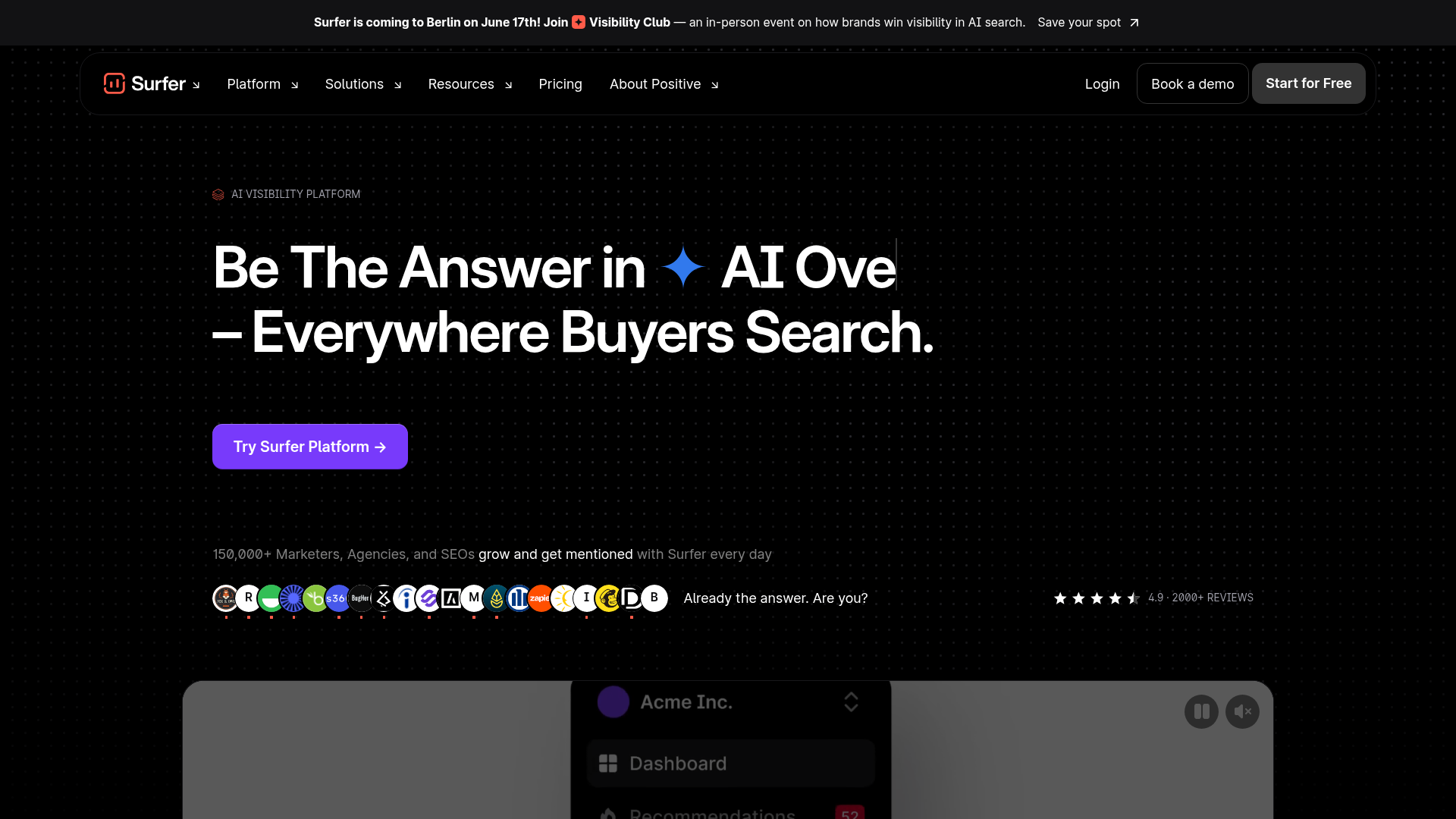
Surfer SEO is one of the best-known AI SEO tools for teams that care a lot about on-page optimization. Founded in 2017, it’s widely used for content editing, keyword coverage, and building SEO-friendly articles with real-time scoring. For many marketers, the Content Editor is the main reason they choose it, since it gives writers clear guidance while they work through a draft, which is honestly pretty useful. Surfer has also expanded into AI visibility tracking, team workflows, and publishing support for larger content programs, so it’s a solid choice for teams that want optimization help across planning, writing, and collaboration.
Core Features
- Real-time Content Editor
- SEO scoring during the writing process
- Content briefs and outline generation
- AI search visibility tracking
- Team workflows and collaboration
- API access for larger operations
- Optimization support across larger content efforts
Pros
- Excellent optimization workflow: Writers get immediate guidance instead of waiting for a manual SEO review, and that usually saves time.
- Strong team support: Collaboration features make it useful for content teams with multiple stakeholders involved.
- Widely trusted: It has strong market awareness and, in this view, feels like a mature product.
- Helpful for scaling: It can support larger editorial programs better than more basic AI writing tools.
Cons
- Can get expensive: Costs can rise pretty quickly as usage grows and teams need more.
- Risk of sameness: If recommendations get overused, content can start to sound too formulaic, which is a real concern.
- Less automated than Seozilla: It helps improve writing, but it doesn’t reduce end-to-end content operations in quite the same way.
Who It’s For
Surfer SEO is best for marketing teams, editors, and SEO specialists who already have a writing process in place and want stronger optimization built into it. It’s especially useful when several writers need a clear SEO framework they can follow consistently, so everyone is working from the same playbook.
Unique Value Proposition
Surfer’s biggest strength is its live optimization environment. It tends to work especially well for teams that want SEO guidance during the writing stage instead of only after something has been published, which is often where it helps most. Compared with Seozilla, though, it stays more focused on improving drafts and offers less automation across the broader content workflow.
Pricing: Public pricing available; plans appear to start around $99/month
Website: https://surferseo.com
3. Clearscope
At a Glance
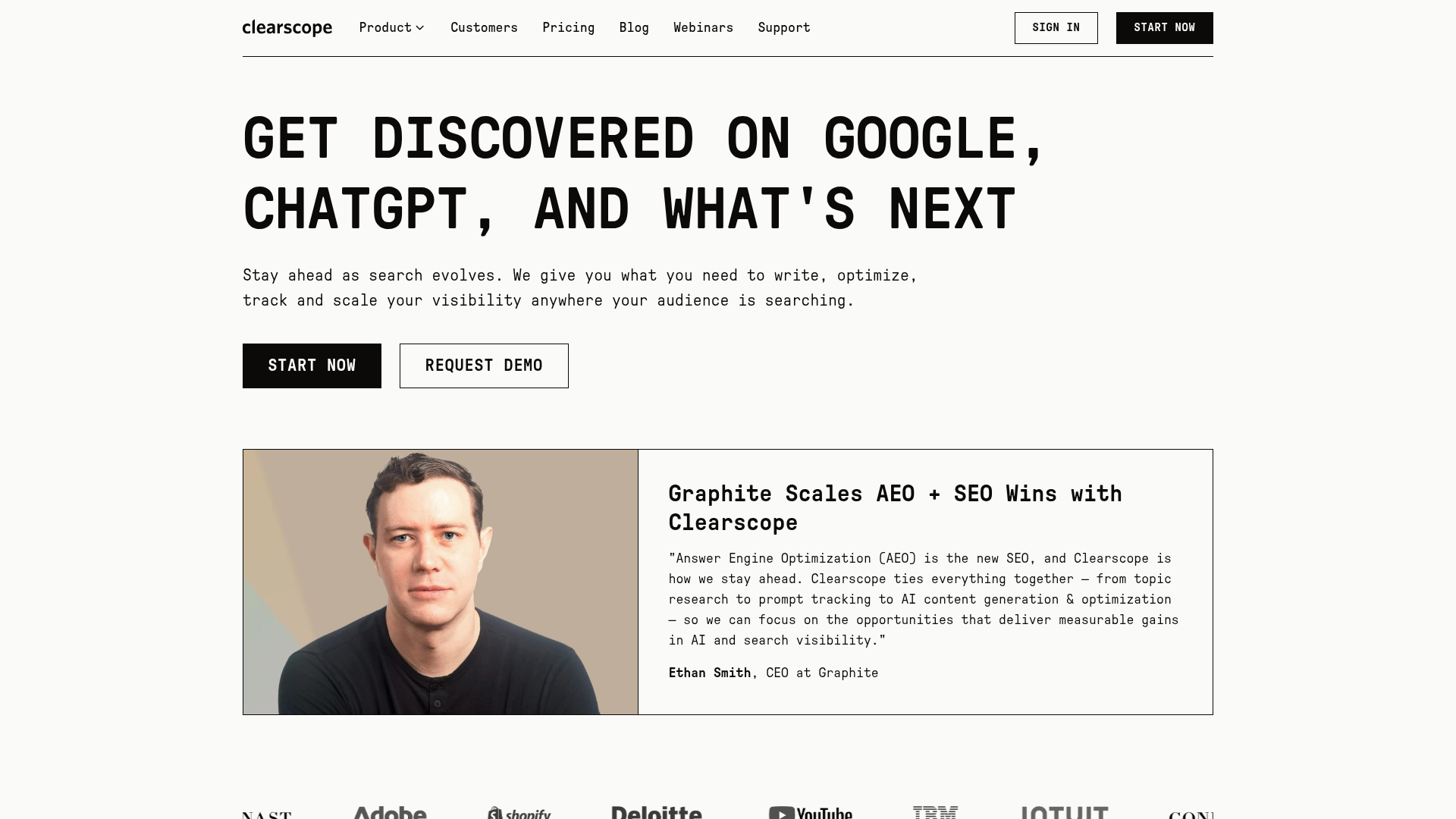
Clearscope, founded in 2016, is a well-known content optimization platform that stands out because it’s simple to use and genuinely helpful for editorial quality control. It helps teams create better briefs, improve topic coverage, and score content for relevance and depth, which is often what content managers need most. A lot of teams like it because the interface feels clean, and the recommendations are easy to follow without a lot of second-guessing. For companies trying to keep quality steady across a larger group of writers, Clearscope remains a solid option among AI writing tools and SEO platforms.
Core Features
- Content optimization and grading
- Keyword recommendations and topic guidance
- AI search visibility support
- Content reports
- Tracked topics
- Editorial workflow support
- Brief creation assistance
Pros
- Clean interface: Writers and editors can usually get started without much training.
- Strong quality control: Useful for keeping standards more consistent across a team.
- Great briefs: Gives editors a clear starting point before writing begins.
- Easy-to-read scores: The grading system is simple and easy to understand.
Cons
- Not very all-in-one: It focuses more on optimization than full workflow automation.
- Can feel pricey: Some teams will probably see the starting cost as high for a specialized tool.
- Less publishing support: It doesn’t handle CMS automation the way Seozilla does.
Who It’s For
Clearscope is a good fit for editorial teams, agencies, and in-house SEO departments that want stronger content quality and better consistency. Usually, it works best when writers and publishing systems are already in place and the main need is optimization rather than the full setup. It’s helpful, but it’s not a complete replacement for everything.
Unique Value Proposition
Clearscope stands out because of its editorial clarity, and that is really the main appeal here. It gives teams a direct way to improve content depth by making briefs clearer, showing topic gaps, and showing relevance scores without adding too much complexity or making the process feel heavy. If the main challenge is improving the content itself instead of automating the whole operation, Clearscope is a solid choice.
Pricing: Public pricing available; entry point appears around $99/month promotional or $129/month standard
Website: https://www.clearscope.io
4. MarketMuse
At a Glance
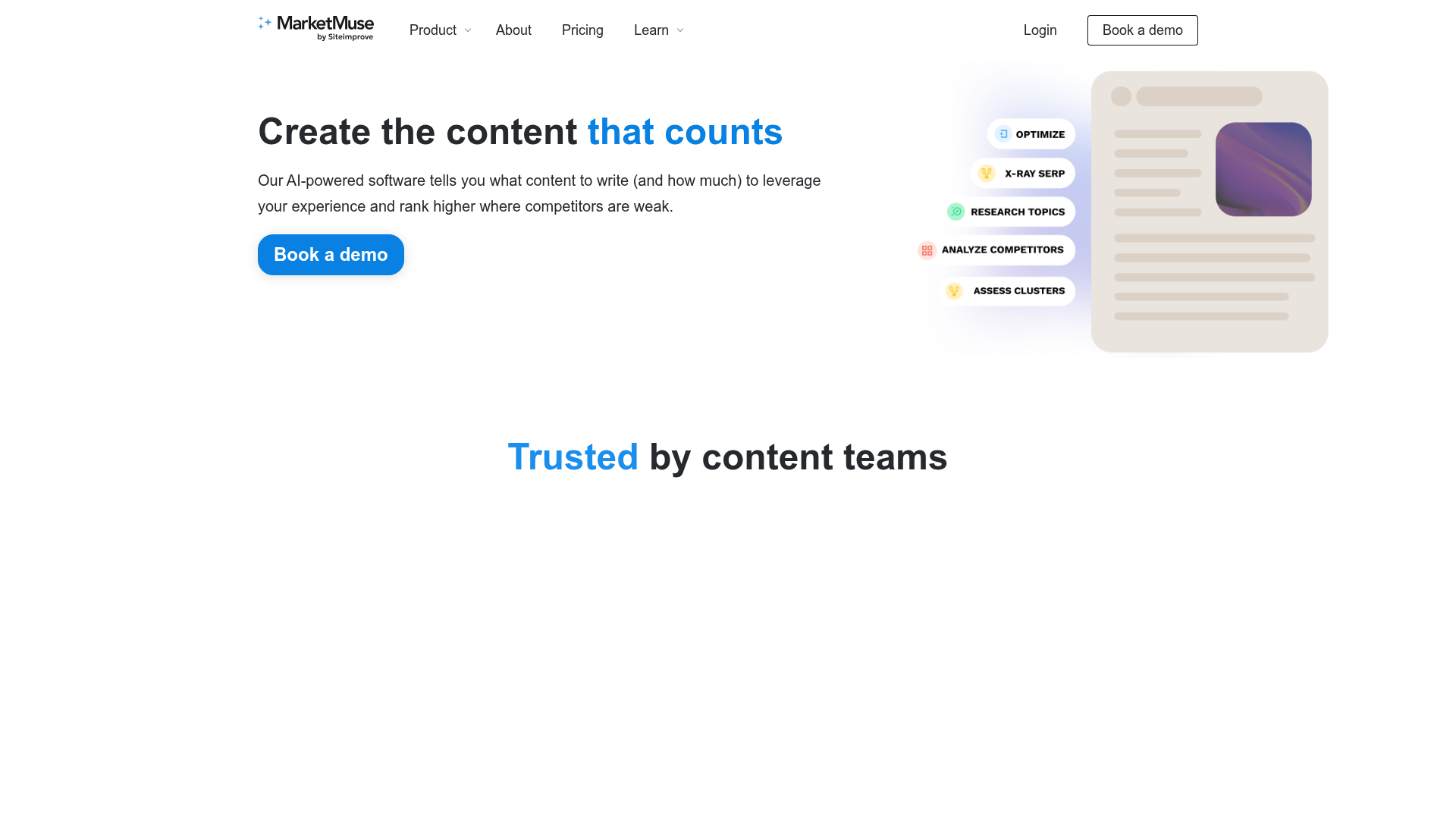
Founded in 2015, MarketMuse takes a more strategic approach than many AI SEO tools. It’s mainly known for topic authority analysis, content planning, and gap discovery, and it also helps teams figure out what to publish next, which is often the hard part. That can be especially useful for companies with large content libraries or teams trying to build authority across topic clusters. Instead of focusing mostly on draft-level optimization, MarketMuse is stronger at planning, prioritizing, and deciding whether content work should go toward new pages, updates, or broader topic coverage. That’s usually where it stands out most.
Core Features
- AI-driven content planning
- Topic authority modeling
- Content gap analysis
- Content briefs
- Optimization recommendations
- Inventory analysis for existing pages
- Strategic planning for teams and agencies
Pros
- Excellent planning depth: Very useful for figuring out where content resources should probably go first.
- Strong topic clustering: Helpful for semantic SEO, especially when building authority across related pages matters, not just on one article.
- Helpful for large sites: Works well when managing a lot of pages.
- Good for strategy teams: Better than many lighter tools for prioritizing and deciding what to update next.
Cons
- Steeper learning curve: It can take time to get the full value from the platform, so most teams probably won’t master it right away.
- Less execution-focused: It’s stronger for planning than for quick content production.
- May be harder for smaller teams: Pricing and complexity can feel like a lot for lean operations, especially if the workflow is pretty simple.
Who It’s For
MarketMuse is a better fit for larger marketing teams, agencies, and enterprise-style content operations that need strategic guidance on what to publish, what to update, and how to organize content into clusters. In many cases, it makes more sense for teams managing lots of content across several topics. Because of that, it’s usually not the best choice for teams that mainly want to reduce day-to-day production work quickly.
Unique Value Proposition
MarketMuse stands out for strategic SEO planning. When the main challenge is finding content gaps and building authority across a large site, it offers real depth. Its biggest strength is probably helping teams see which topics are thin, which pages may need updates, and where broader cluster coverage is missing. If reducing workflow matters more than deep planning, Seozilla has more of a practical edge, especially when faster execution is the main priority.
Pricing: Public pricing available; varies by plan and content volume
Website: https://www.marketmuse.com
How They Stack Up for Real Content Operations
The biggest difference between these tools is usually where they actually save time. Surfer SEO and Clearscope tend to help most when a writer is already well into a draft, which is often where they fit best. MarketMuse stands out earlier in the process, especially when teams are shaping strategy and planning topics. Seozilla helps with the parts many teams probably find hardest: creation, consistency, publishing automation, and the repetitive work tied to those steps, which can add up fast.
For teams publishing a handful of high-value pages each month, optimization-first tools may be enough. In many cases, that setup works well. Bigger operations often need AI SEO tools that cut repeated tasks across the full workflow, so teams are not stuck doing the same manual work again and again. That gives Seozilla a practical edge over narrower AI writing tools.
Ready to Reduce the Work, Not Just Add Another Tool?
Most content teams do not need more tabs open. What usually slows them down is a pile of bottlenecks. The problem is not just writing faster. It is also handling briefs, keeping brand tone consistent, improving for SEO, reviewing drafts, and getting everything into the CMS without slowing the whole team down, which happens a lot. Plenty of tools help a little, sure, but they still leave too much manual work in the process. In many cases, that is exactly what keeps teams stuck.
That is where Seozilla is different. It is built around that operational pain, not just the writing part. It helps teams create SEO content at scale, keep messaging consistent with brand voice, and make publishing easier through CMS integration, which honestly can save a lot of time. For agencies and mid-sized growth teams, that often means less time spent coordinating and more room for strategy, testing, and the work that actually drives results. Less busywork, fewer handoff delays, and probably less chasing people for updates.
If the best AI SEO tools are being compared because the current workflow feels too manual, this is the one worth checking first. Visit https://www.seozilla.ai/ to see how it fits the content operation.
Frequently Asked Questions
Start with the problems your team actually has. If your bottleneck is writing speed, look at content generation. If your bottleneck is editing and optimization, look at scoring and brief tools. If your team needs end-to-end efficiency, features like brand voice control, workflow support, and CMS publishing matter much more.
Track both workflow metrics and SEO metrics. Good signs include faster production time, fewer revision rounds, stronger ranking improvements, more pages published per month, and better organic traffic growth over time. A useful tool should reduce effort and improve outcomes, not just produce more text.
Entry pricing for popular tools often starts around $99 to $129 per month, but costs can rise fast with team seats, content limits, or advanced features. Some platforms use custom pricing for larger operations. If you publish at scale, total workflow savings matter more than the lowest monthly fee.
Workflow improvements can happen almost right away, especially if the tool reduces research, drafting, or publishing time. SEO performance usually takes longer, often several weeks to a few months depending on your site authority, competition, and publishing consistency. Teams using a system like SEOZilla.ai may notice operational gains before ranking gains.
Mid-sized businesses, agencies, SaaS brands, ecommerce teams, and publishers often get the most value because they have enough content volume to justify process improvement. Smaller teams can benefit too, but the return is usually highest when content production is already an active growth channel.
That depends on your workflow. If you already have strong writers, editors, and publishing systems, optimization tools may be enough. If your team wants to remove manual steps across creation and publishing, an end-to-end platform such as SEOZilla.ai may be a better fit because it addresses more of the actual workload.