Best On-Page SEO Tools for Content Refresh Work

TLDR; The article compares four leading tools for content refresh campaigns: Seozilla, Surfer SEO, Clearscope, and Frase.
Seozilla will probably feel like the best fit for teams that need end-to-end workflow support. It brings together AI-powered writing, on-page optimization, brand voice control, CMS integration, and publishing automation, which is honestly a lot to get in one tool. Because everything sits in one place, teams usually spend less time moving between different platforms.
Surfer SEO and Clearscope are known for strong optimization guidance and solid editorial quality, which is often a big advantage for page-level work. Frase stands out as the lower-cost option for smaller teams that want research, writing, and optimization in one package. It feels like a practical choice.
The main point is to choose based on how the workflow actually works. For page-level improvements, optimization-focused tools usually make sense. If the goal is refreshing content at scale and growing organic traffic faster, broader automation and publishing support should matter more.
Refreshing old content can boost rankings faster than starting again from scratch. Picking the right platform, though, is not always easy. Lots of tools promise better briefs, stronger optimization, and faster writing, so narrowing the list takes a bit of work. If you’re looking for the best on-page SEO tools, the real need is usually pretty simple: help the team refresh pages faster, grow organic traffic, and spend less time on slow manual work. In fact, choosing among the best on-page SEO tools can directly affect how efficiently your team updates and publishes refreshed articles.
To make the choice easier, I reviewed leading options for content refresh work and compared what each one actually does best. The review looked at optimization features, AI writing support, workflow fit, pricing, and how useful each tool is for marketers, SEO teams, and agencies managing content at scale. Pretty important, really. Refresh workflows also go well beyond adding a few keywords now. Teams need tools that help with strategy, speed, brand voice, and publishing in one place. Newer AI writing tools and AI-powered SEO platforms are changing how that work gets done.
If the plan is to update more pages, keep quality high, and move faster without so much manual effort, this comparison should make it easier to find the right fit for your team.
What You’ll Find in the Best On-Page SEO Tools
- Seozilla
- Surfer SEO
- Clearscope
- Frase
Tools for Content Update Campaigns
1. Seozilla
At a Glance
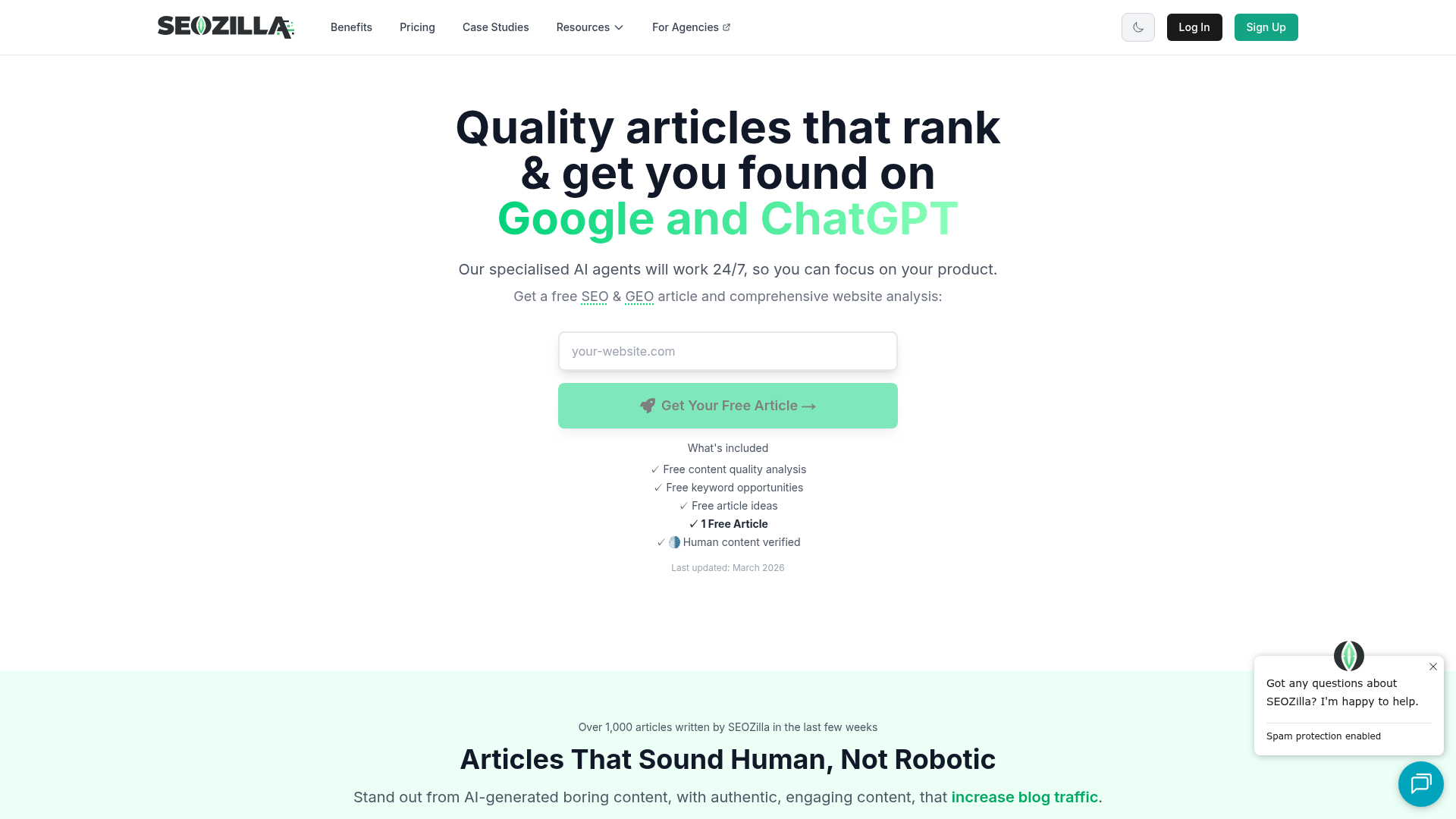
SEOZilla.ai gives SEO teams more than basic on-page scoring, especially for content refresh work, which is a big part of why it stands out. It works well for teams updating a large number of pages, helping marketers handle those updates while keeping them aligned with brand voice and SEO goals. Instead of relying on manual writing or jumping between several separate tools, it brings content creation, optimization, personalization, and publishing into one workflow. For mid-sized businesses and agencies, that can mean less friction in production and a faster path to organic growth.
Core Features
- AI-powered SEO content creation for refresh and net-new pages
- Brand voice adaptation to keep updates consistent
- On-page optimization support tied to search performance goals
- CMS integrations for smoother publishing workflows
- Auto-publishing support to reduce manual handoff work
- Content production that can grow for agencies and growth teams
- Content personalization and SEO automation features
Pros
- Built for scale: Teams can refresh and publish more content without adding more manual writing work.
- Brand-aware output: The platform adapts to company tone, so refreshed pages stay consistent with existing content.
- Workflow efficiency: Content creation, optimization, and publishing stay closer together, which reduces tool switching.
- Strong fit for growth teams: It supports repeatable SEO work instead of just one-off article edits.
- Automation-first approach: Useful for marketers who want AI writing tools to do more than create rough drafts while saving time.
Who It’s For
Seozilla fits digital marketers, SEO specialists, content managers, and agency teams that need to refresh content at scale. It is a practical option for companies that want automation, reliable brand voice consistency, and a more complete workflow than traditional optimization-only tools usually offer.
Unique Value Proposition
Seozilla stands out because it connects SEO optimization with full content operations. Many on-page SEO tools are helpful for scoring and recommendations, but teams still have to manage writing, rewriting, and publishing as separate steps. Seozilla helps close that gap. For content refresh work, that means teams can identify what needs improvement on a page, create updated content faster, and move it into a CMS with less friction, which is often where the process slows down. For teams focused on organic growth, that end-to-end setup is a real advantage.
Real World Use Case
Take an agency managing 150 aging blog posts for a SaaS client. That is a heavy workload. Instead of manually auditing, rewriting, and uploading every article, the team can use Seozilla to generate optimized refreshes in the right voice and move content through a more automated workflow. That saves time and helps maintain quality.
Pricing: Contact for pricing
Website: https://www.seozilla.ai/
Additionally, for deeper insights into how these tools compare, you can explore related guides such as Best On-Page SEO Tools for AI-Optimized Content Workflows and Best On-Page SEO Tools for Content Teams to see how they align with different team needs.
After reviewing the leading options, comparing the differences side by side makes the tradeoffs easier to see.
| Company | Key Features | Pros | Cons | Pricing |
|---|---|---|---|---|
| Seozilla | AI content creation, on-page optimization, brand voice adaptation, CMS integration, auto-publishing | Scalable workflow, brand-aligned output, automation-first, strong for agencies and growth teams | None | Contact for pricing |
| Surfer SEO | Content Editor, NLP terms, content audits, AI writing, integrations | Strong optimization workflow, popular with agencies, solid refresh features | Credit limits, can feel prescriptive, cost rises with scale | About $89, $99/month |
| Clearscope | Content grading, topic recommendations, briefs, Docs and WordPress integrations | Clean UI, strong editorial control, trusted by enterprise teams | Expensive, less workflow automation, not as full-lifecycle focused | About $189/month |
| Frase | Content briefs, SERP research, AI writing, optimization, question research | Affordable entry point, solid research tools, useful for refreshes | Needs editing, lower-tier limits, less robust for advanced teams | From about $15/month |
The table shows a clear split: some tools are especially strong at scoring and recommendations, while others are better at helping teams actually finish refresh work. Seozilla stands out for businesses that need both optimization and execution.
2. Surfer SEO
At a Glance
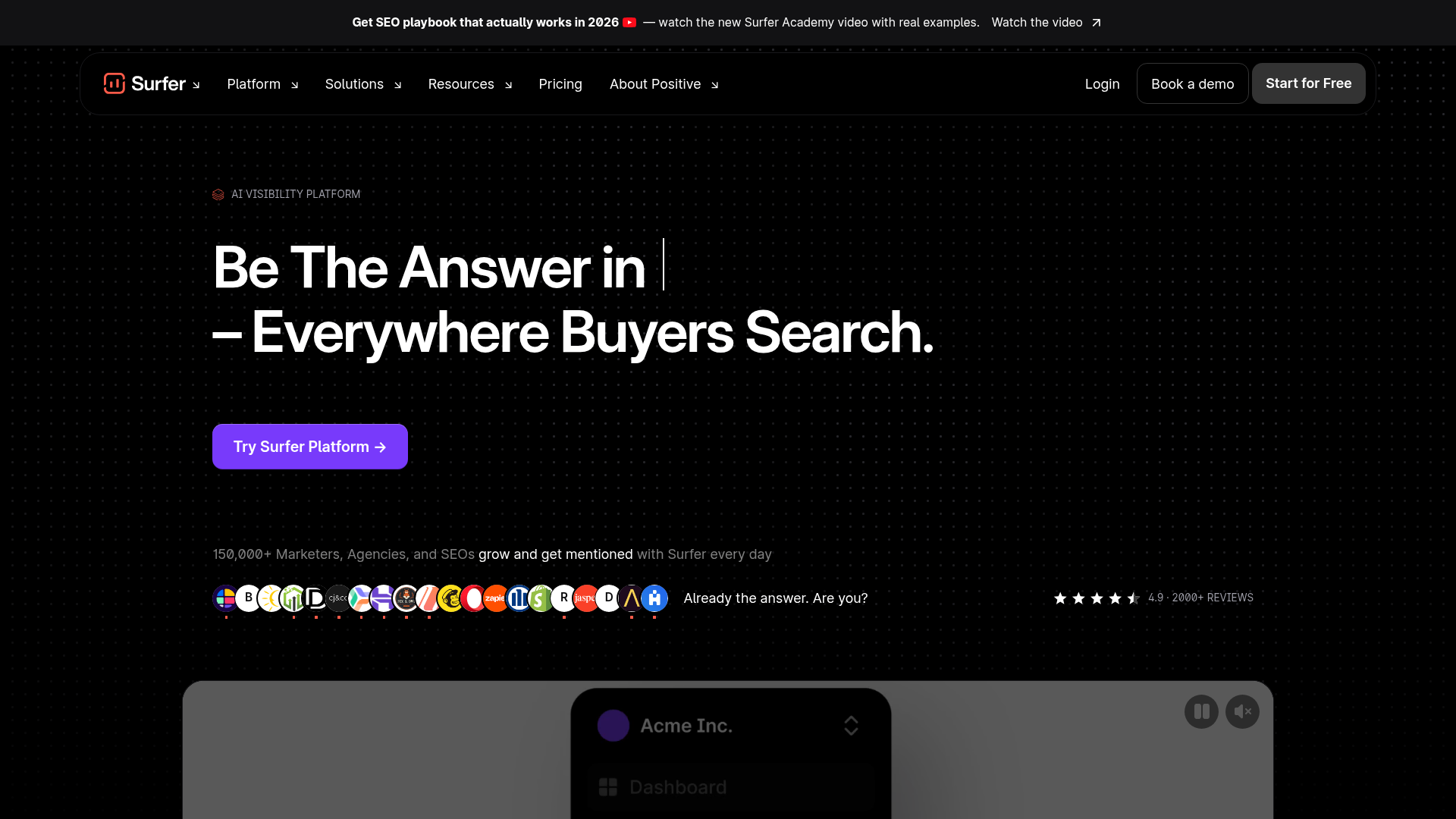
Surfer SEO is one of the better-known tools for on-page optimization. Since launching in 2017, SEO teams, agencies, and content marketers have used it when they want recommendations based on live SERP analysis instead of guesswork. A big reason people keep using it is the Content Editor, especially for updating older content. Writers get real-time scoring, term suggestions, and structure guidance as they work, which makes it easier to improve pages without stopping to decide what to do next. Surfer also includes audit features and AI-assisted workflows, so teams updating existing pages can follow a clear process and make specific changes with more confidence.
Core Features
- Content Editor with real-time optimization scoring
- SERP-based keyword recommendations and NLP term suggestions
- Content audits for refresh opportunities
- AI writing support and content generation workflows
- Integrations with Google Docs, WordPress, plus Jasper
- Page-level optimization suggestions
Pros
- Widely trusted: Surfer is already used by many agencies and SEO teams.
- Strong refresh workflow: Its audit and optimization features are especially helpful for updating older articles and landing pages.
- Real-time guidance: Writers can edit as they go and see optimization feedback live.
- Good integrations: It fits into common publishing workflows through Google Docs and WordPress.
Cons
- Credit-based limits: Teams with heavier usage may hit restrictions pretty fast.
- Can feel too rigid: Some teams feel the scoring system is too strict, which can make the process frustrating.
- Scaling cost: Pricing can become expensive for high-volume content operations.
Who It’s For
Surfer SEO is a good fit for teams that want a proven on-page optimization platform and are comfortable with a score-driven writing process. It works well for teams that prefer clear direction during editing instead of making judgment calls from scratch. Agencies and SEO specialists focused on improving individual pages will likely get the most from it, especially if the priority is hands-on optimization rather than broader content planning.
Unique Value Proposition
Surfer turns SERP analysis into practical writing guidance. For refresh work, that means marketers can quickly find missing terms, weak structure, and content gaps on an existing page. Compared with a platform like Seozilla, Surfer is more focused on optimization details. It is less centered on full SEO content automation, so the focus stays on page-level improvements rather than wider workflow automation.
Pricing: About $89, $99/month from public sources
Website: https://surferseo.com
This video gives useful context on SEO basics and what actually matters when improving older pages.
3. Clearscope
At a Glance
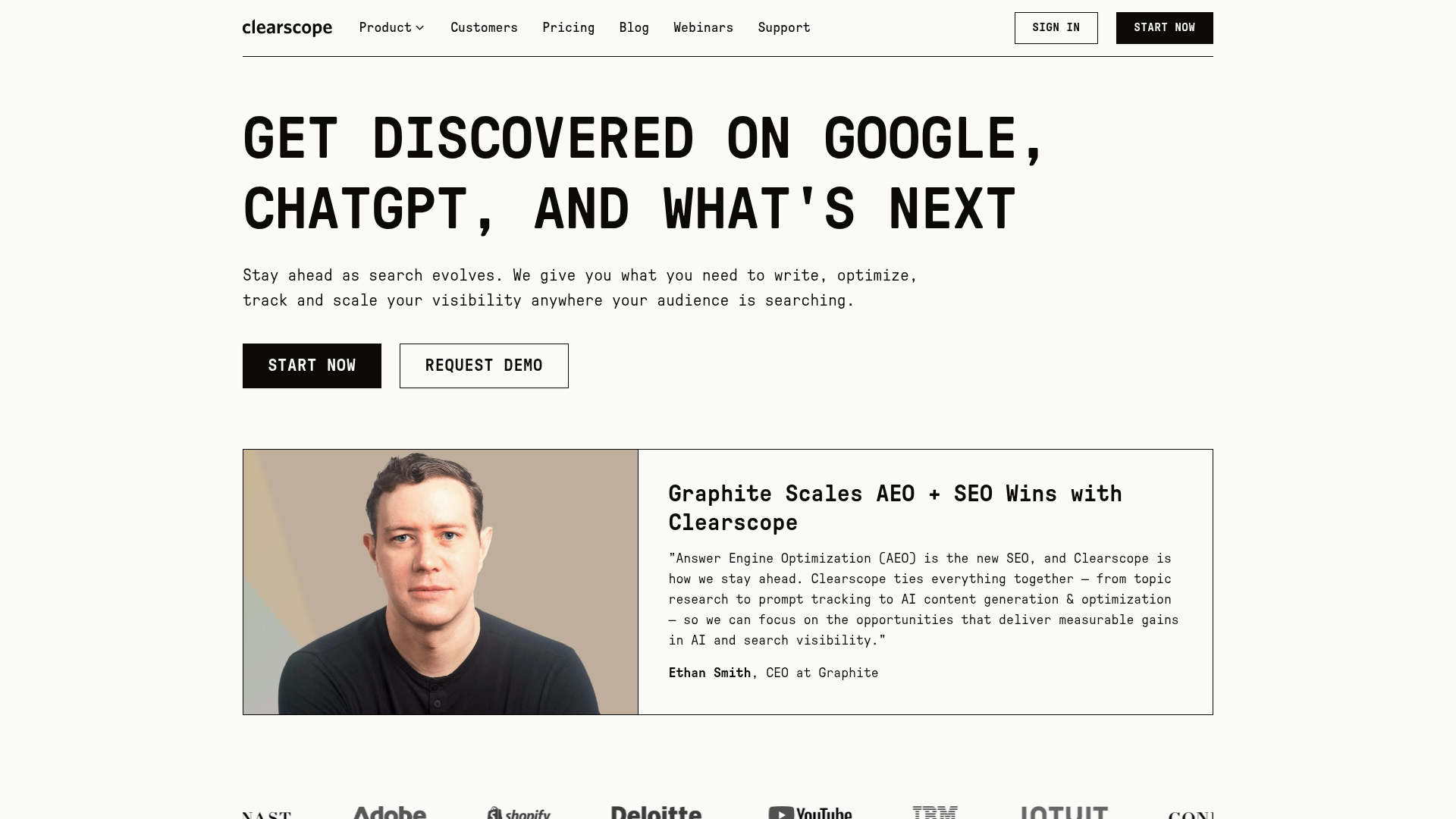
Founded in 2016, Clearscope is a premium content optimization platform known for its clean interface and reliable support for editorial workflows. Agencies, enterprise teams, and content leads often choose it when quality control matters just as much as SEO, since that balance is a big part of why it appeals to them. It’s especially helpful for updating pages that need better topic coverage or a closer match with search intent, with its grading system, topic suggestions, and content brief tools.
Core Features
- Content optimization based on term coverage and intent
- Content grading
- Keyword recommendations and topic suggestions
- Google Docs integration
- WordPress integration
- Content brief creation for teams, writers, and freelancers
Pros
- Very easy to use: The interface feels clean and straightforward for both writers and editors.
- Strong editorial quality control: Content grades help teams keep standards more consistent across projects.
- Good for collaboration: Briefs and integrations support team workflows well and can save time.
- Trusted by larger teams: It’s well regarded in agency and enterprise settings.
Cons
- Higher cost: It’s one of the more expensive tools in this space.
- Less automation: It stays more focused on optimization than full workflow execution.
- Not as AI-first: Teams looking for deeper AI writing tools may need extra platforms.
Who It’s For
Clearscope fits editorially mature teams that want strong optimization guidance along with a polished user experience. For content managers who need better quality review and clearer briefs for writers, it can be a helpful and practical option.
Unique Value Proposition
What stands out most is how simple and manageable Clearscope makes on-page optimization feel. It stays focused on high-quality content optimization instead of trying to do everything at once, which will suit some teams better. Teams that want more automation and publishing support, though, may find a broader workflow benefit in Seozilla.
Pricing: About $189/month from public sources
Website: https://www.clearscope.io
4. Frase
At a Glance
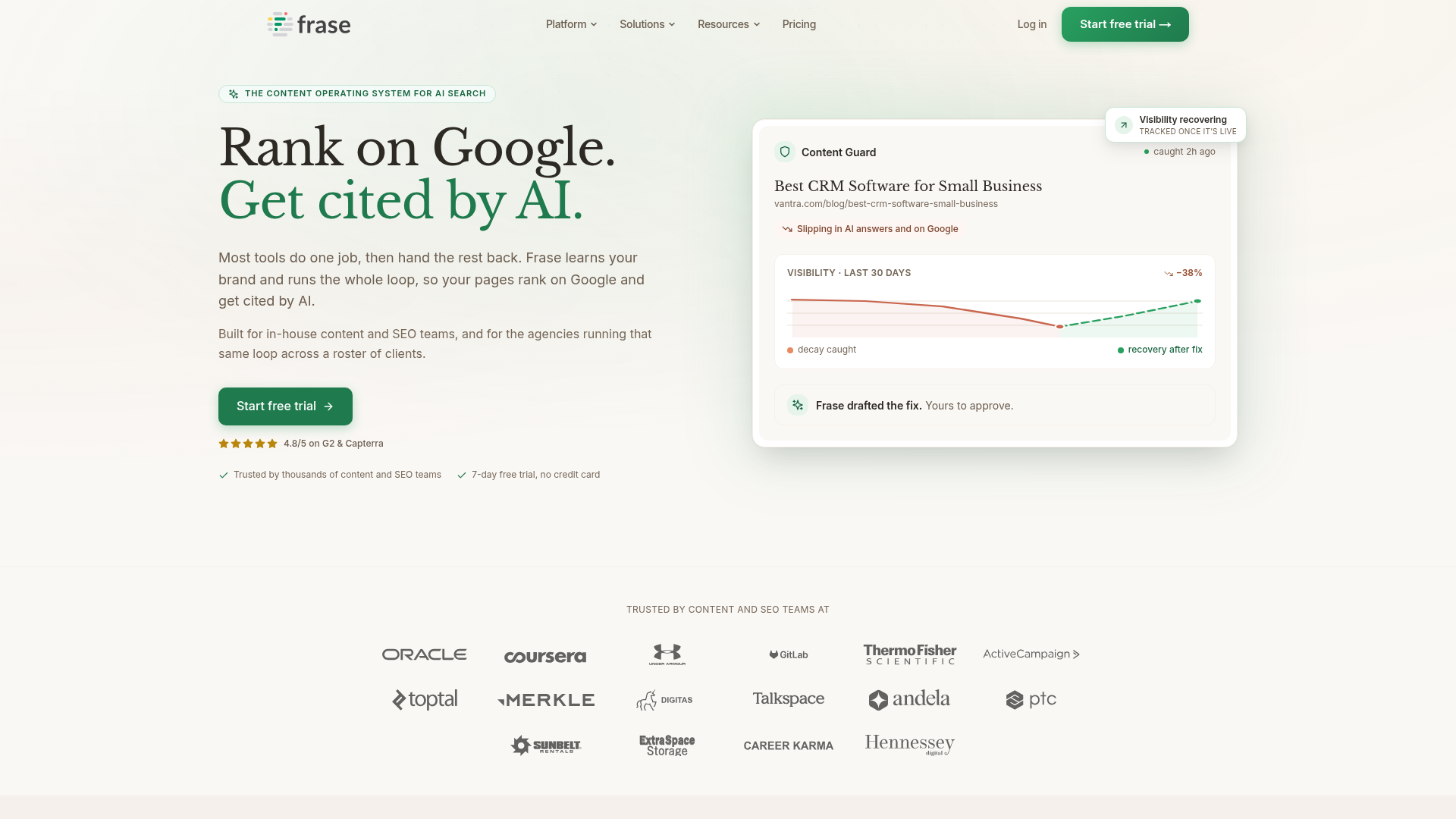
Frase, which was also founded in 2016, brings together research, AI writing, and optimization in a more affordable package. It’s a popular pick for smaller teams, lean marketing departments, and content managers who want one tool for outlines, briefs, rewrites, refresh support, and related content work. For older posts that need updates, Frase can help find missing questions, improve topic coverage, and speed up rewrites with AI support. It’s a practical choice for teams trying to do more without adding extra tools.
Core Features
- SEO content briefs
- SERP and competitor research
- AI-assisted writing and rewriting
- Optimization tools for existing content
- Question research
- Topic clustering support
Pros
- Affordable starting point: It’s easier to try than many premium tools, so the upfront commitment feels lower.
- Good all-in-one value: Research, writing, and optimization are grouped together in one place.
- Useful for refresh work: It helps teams revise outlines and fill topic gaps in older content.
- Flexible for lean teams: It can be a good fit for solo marketers and small content teams.
Cons
- Needs editing: AI output may need more human review, so it’s not something teams should publish as-is.
- Less advanced for enterprise: Bigger teams may eventually outgrow it.
- Usage limits on lower plans: Lower pricing may not include everything a team needs.
- Some teams may need more: It can fall short for broader automation or publishing needs.
Who It’s For
Frase works best for small to mid-sized teams that want practical SEO and AI writing tools without paying enterprise-level prices. It’s also useful for content managers handling both refreshes and new content in the same workflow, which can make daily work a bit easier.
Unique Value Proposition
Frase stands out by offering affordability along with solid functionality. It gives teams one place to research, write, and optimize without a major upfront investment. Teams that need automation that can grow, stronger brand voice alignment, and easier publishing may still see a clearer advantage in Seozilla, depending on their daily workflow needs.
Pricing: From about $15/month based on public references
Website: https://www.frase.io
How to Pick the Right Tool for Your Team
The right choice really depends on how your team already handles content refresh work. If the main need is suggestions for individual articles, Surfer SEO and Clearscope are both good options. But if budget matters more and you want a flexible way to start, Frase makes a lot of sense and is easier to try without a huge commitment. For teams trying to grow refresh work across lots of pages while keeping quality and brand consistency consistent, Seozilla stands out as the strongest option on this list.
For further comparisons, you can read The Best On-Page SEO Tools to Use in 2026: Latest Rankings and Insights to understand upcoming trends and how automation is evolving.
Content refresh work is not just an SEO problem. It also affects day-to-day operations. Teams run into writer bottlenecks, uneven messaging, slow approvals, and awkward CMS handoffs. Traditional on-page SEO tools are useful for finding issues, but they do not always fix production problems. Seozilla connects strategy and execution in a more useful way, and that difference is what puts it at the top here.
Stop Letting Old Content Hold Back Your Rankings
A growing backlog of older pages can slow everything down fast. Manual refresh work takes too long, writers get stuck, and SEO recommendations end up sitting in spreadsheets instead of going live. Publishing becomes one more bottleneck, while competitors keep improving their content, which gets frustrating fast.
The best refresh workflow does more than point out what is wrong on a page. It should help teams fix issues quickly, keep work consistent, and manage content at scale. Seozilla stands out here by helping teams move past chasing basic optimization scores. It gives them a fuller system for SEO content production. With AI-powered writing, brand voice adaptation, CMS-friendly workflows, and support for marketers who need results without adding more manual work, it is built for real work (the kind your team deals with every day).
For teams looking for a better way to refresh content and support long-term organic growth, visit https://www.seozilla.ai/ to see how it fits into the workflow.
Frequently Asked Questions
Look for tools that help with content audits, keyword and topic coverage, search intent alignment, AI-assisted rewriting, and workflow integrations. If your team updates content often, it is also smart to prioritize automation and publishing support, not just optimization scores.
Track changes in rankings, organic traffic, click-through rate, engagement, and conversions after updates go live. You should also compare how much time your team spends per refresh before and after using the tool.
Yes, as long as they are used with clear review standards. Good AI writing tools can speed up rewrites, improve coverage, and reduce manual work, especially when paired with SEO recommendations. Platforms like SEOZilla.ai are useful for teams that want both AI-driven writing and a more scalable SEO workflow.
Pricing varies a lot. Entry-level tools can start around $15 per month, while more established platforms often begin around $89 to $189 per month or more. Enterprise or custom workflow platforms may require contact-based pricing.
Some pages show movement in a few weeks, but meaningful gains often take one to three months depending on your site, competition, and crawl frequency. Stronger workflows can speed up execution, which helps teams test and improve more pages faster.
Agencies, SaaS companies, publishers, and mid-sized businesses with large content libraries often get the most value. If your team manages many pages and needs to refresh content regularly, a platform such as SEOZilla.ai can be especially useful because it supports scale, consistency, and automation.
Ultimately, exploring the best on-page SEO tools helps teams understand how AI-driven optimization can streamline their workflow and improve content quality across multiple channels.