Choosing the Best AI for Content Creation

TLDR; The article reviews four leading AI writing tools for marketers and content teams: Seozilla, Jasper, Copy.ai, and Writesonic. Each has its own strengths, and the best choice usually depends on what a team needs most. Seozilla stands out as the best AI content option for teams focused on SEO, brand consistency, automation, and CMS publishing.
Jasper is the strongest fit for collaboration and brand control, and that comes across clearly here. Copy.ai works well for workflow automation across sales and marketing, while Writesonic is a good choice for affordable, high-volume content creation. The main point is to choose a tool not just for writing quality, but also for how well it supports SEO goals, improves workflow efficiency, and helps teams scale content production.
If you’re trying to find the best AI for content, you probably don’t want some toy tool that spits out a few catchy lines and then runs out of steam. You need something that helps your team create useful, search-friendly content at scale without adding more cleanup work than it saves. Digital marketers and SEO teams are under pressure to publish faster, protect brand voice, and prove ROI.
I reviewed some of the top AI writing tools marketers and content teams use today, with a close look at what matters in day-to-day work: SEO support, workflow fit, quality control, publishing speed, and how each platform handles growth as a team gets bigger. Some tools work better for quick copy. Others fit campaign workflows more naturally. A few are built to help teams create content that supports organic traffic growth in a more automated way.
For teams that care about search performance, consistency, and doing less by hand, SEOZilla.ai stands out as the strongest overall choice in this comparison.
What You’ll Find in This Comparison
- Seozilla
- Jasper
- Copy.ai
- Writesonic
AI Writing Tools to Use
1. Seozilla
At a Glance
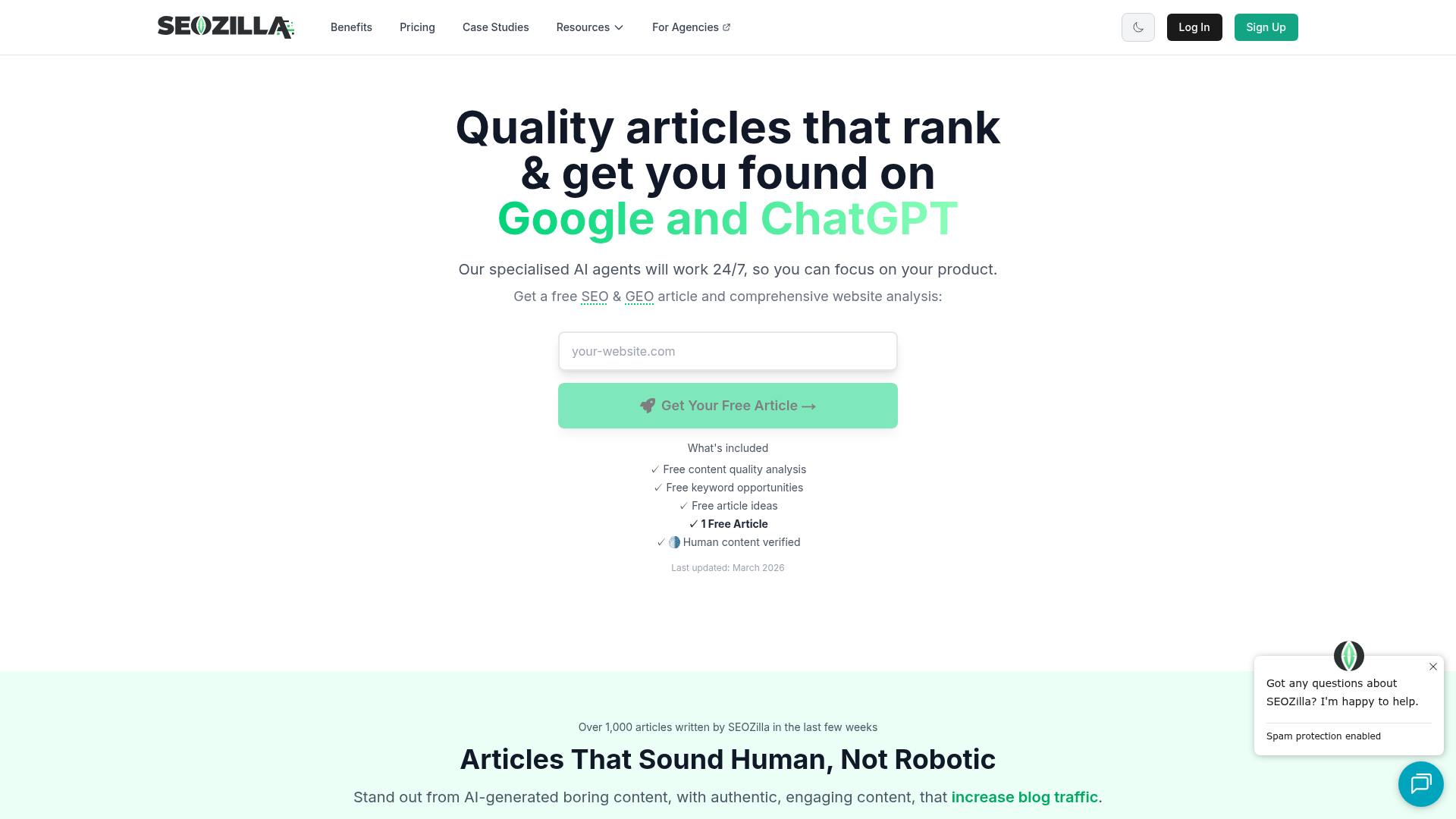
Seozilla is the featured top pick for teams that need more than basic AI copy generation. It helps marketers, SEO specialists, and agencies create high-quality, brand-aligned content designed to support organic traffic growth. It’s not made for one-off prompts. Rather than treating content like a series of separate requests, Seozilla focuses on automation, SEO structure, brand voice adaptation, and CMS integration to make publishing simpler. That makes it a strong match for mid-sized businesses and growth teams that need scalable output without depending on constant manual drafting and editing.
Core Features
- AI-powered SEO content creation for blogs and website pages
- Brand voice adaptation for more consistent messaging
- Content personalization aligned with business goals
- SEO automation to reduce manual content production work
- CMS integrations for auto-publishing workflows
- Organic traffic-focused content generation
- Scalable support for teams and agencies managing larger content pipelines
Pros
- Built for SEO growth: Seozilla is designed around organic traffic outcomes, not just text generation. Teams focused on search can get more value from that kind of setup.
- Saves time across the workflow: Automation cuts the time teams spend planning, writing, formatting, and publishing content by hand. A big help.
- Keeps brand voice more consistent: Brand-aligned output gives companies an advantage when they’re publishing across lots of pages or client accounts.
- Strong fit for scaling teams: Mid-sized businesses and agencies can raise content volume without growing headcount at the same pace.
- Publishing is simpler: CMS integrations move content from draft to live page faster, which matters for busy marketing teams.
Who It’s For
Seozilla works best for digital marketers, SEO specialists, content managers, and agency teams that want to scale organic content production efficiently. It’s especially useful for businesses that care about ranking performance, brand consistency, and automated publishing, not just generating rough draft copy.
Unique Value Proposition
Seozilla stands out because it connects AI content creation directly to SEO operations. Plenty of AI writing tools can produce words quickly, but Seozilla fits teams that want those words to support a repeatable SEO strategy. Its focus on automation, personalization, brand voice control, and CMS publishing removes friction across the full content lifecycle. For teams trying to do more with limited resources, that mix of SEO-first thinking and workflow efficiency creates a real advantage.
Real World Use Case
A mid-sized SaaS company may need to publish optimized blog posts every week across several product topics. Instead of briefing writers, editing for voice, and uploading each article manually, the marketing team can use Seozilla to generate brand-aligned SEO content and send it into the CMS faster. Less back-and-forth. The company shortens production time and grows its organic footprint with more consistency.
Website: https://www.seozilla.ai/
If you’re comparing these platforms side by side, the main differences show up in SEO depth, workflow support, and how much manual cleanup the team still needs after the AI finishes its part.
| Company | Key Features | Pros | Cons | Pricing |
|---|---|---|---|---|
| Seozilla | SEO automation, brand voice adaptation, CMS auto-publishing, personalized content generation | SEO-first workflow, scalable for teams, faster publishing, strong brand alignment | None | , |
| Jasper | Long-form content, brand voice controls, templates, team collaboration, campaign workflows | Strong brand controls, team-friendly, broad marketing support | Higher cost, still needs editing, less automation for SEO publishing | Public plans available |
| Copy.ai | Blog and sales copy generation, workflow automation, templates, team use cases | Easy to use, strong process automation, broad use cases | Can feel generic, less SEO-specialized, best value needs deeper adoption | Public plans available |
| Writesonic | AI article writing, SEO tools, templates, Chatsonic assistant, marketing copy | SEO-oriented, affordable, good for volume | Quality varies, needs review, weaker brand consistency than premium tools | Public plans available |
The table shows Seozilla as the most complete choice for teams that want AI content tied closely to SEO execution rather than simple idea generation. The other tools are credible options, but they can need more manual oversight or fit a broader copywriting use case instead of a truly SEO-centered content engine.
2. Jasper
At a Glance
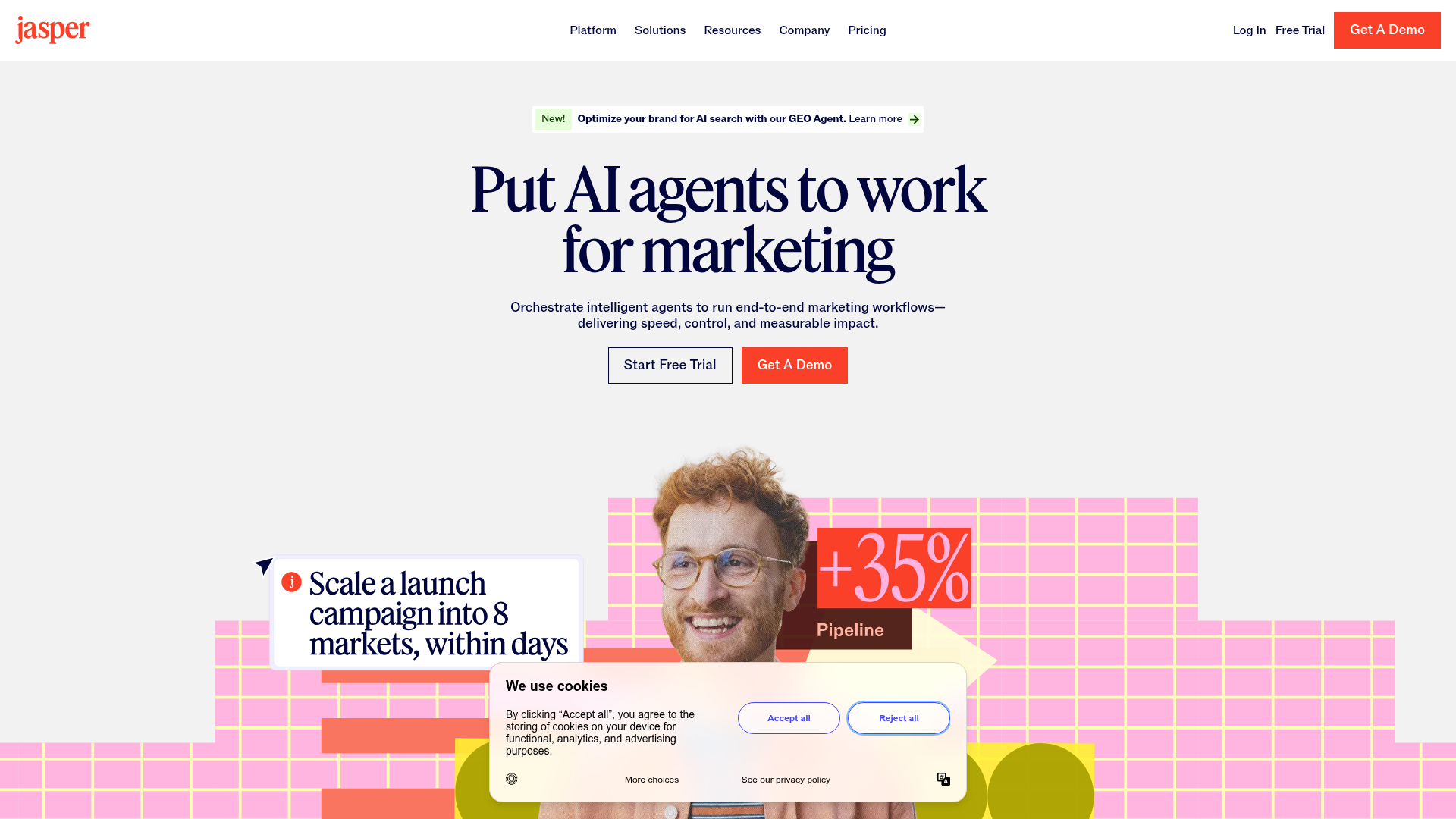
Jasper is one of the best-known names in the AI writing space. Since launching in 2021, it has been a common choice for marketing teams. It is built for brands and organizations that need help creating long-form content, campaign assets, and other marketing copy at scale. Agencies and in-house teams look at Jasper for its collaboration features and brand voice controls. Teams that rely heavily on SEO execution may still need extra systems and editing workflows around Jasper.
Core Features
- Long-form blog and article generation
- Brand voice and style guide controls
- Templates for ads, emails, landing pages, and product copy
- Team collaboration and shared workspaces
- Campaign workflow support
- Marketing-focused AI assistance
Pros
- Strong brand controls: Jasper helps teams keep messaging more consistent.
- Good for collaboration: Shared workspaces and team features fit agency and in-house marketing setups well.
- Well-established platform: Jasper has strong name recognition and broad adoption in the market.
- Versatile content support: It works across many marketing formats, not just blog writing.
- Useful for structured teams: Teams with clear workflows can get more value from how Jasper is set up.
Cons
- Can be expensive: Jasper can cost more than simpler AI writing tools.
- Needs human editing: Teams still need to review content for accuracy, nuance, and final polish.
- Less SEO-automated: Jasper is strong for content generation, but it does not focus as much on SEO automation and publishing flow as Seozilla.
Who It’s For
Jasper fits mid-sized marketing teams, agencies, and brands that want strong collaboration and brand voice controls across different campaign assets. It makes the most sense for organizations that already have internal review processes and can layer SEO strategy on top of the tool.
Unique Value Proposition
Jasper’s biggest strength is the mix of AI writing and team-level brand management. It does more than help one person write blog posts. Jasper supports coordinated marketing output across multiple stakeholders. For companies that need campaign copy, blog content, and brand consistency in one place, that setup can be a real advantage. Teams that want more SEO automation and a more direct publishing flow may find SEOZilla.ai better aligned with search-led content operations.
Pricing: Public plans are available on its website; enterprise pricing is custom.
Website: https://www.jasper.ai/
3. Copy.ai
At a Glance
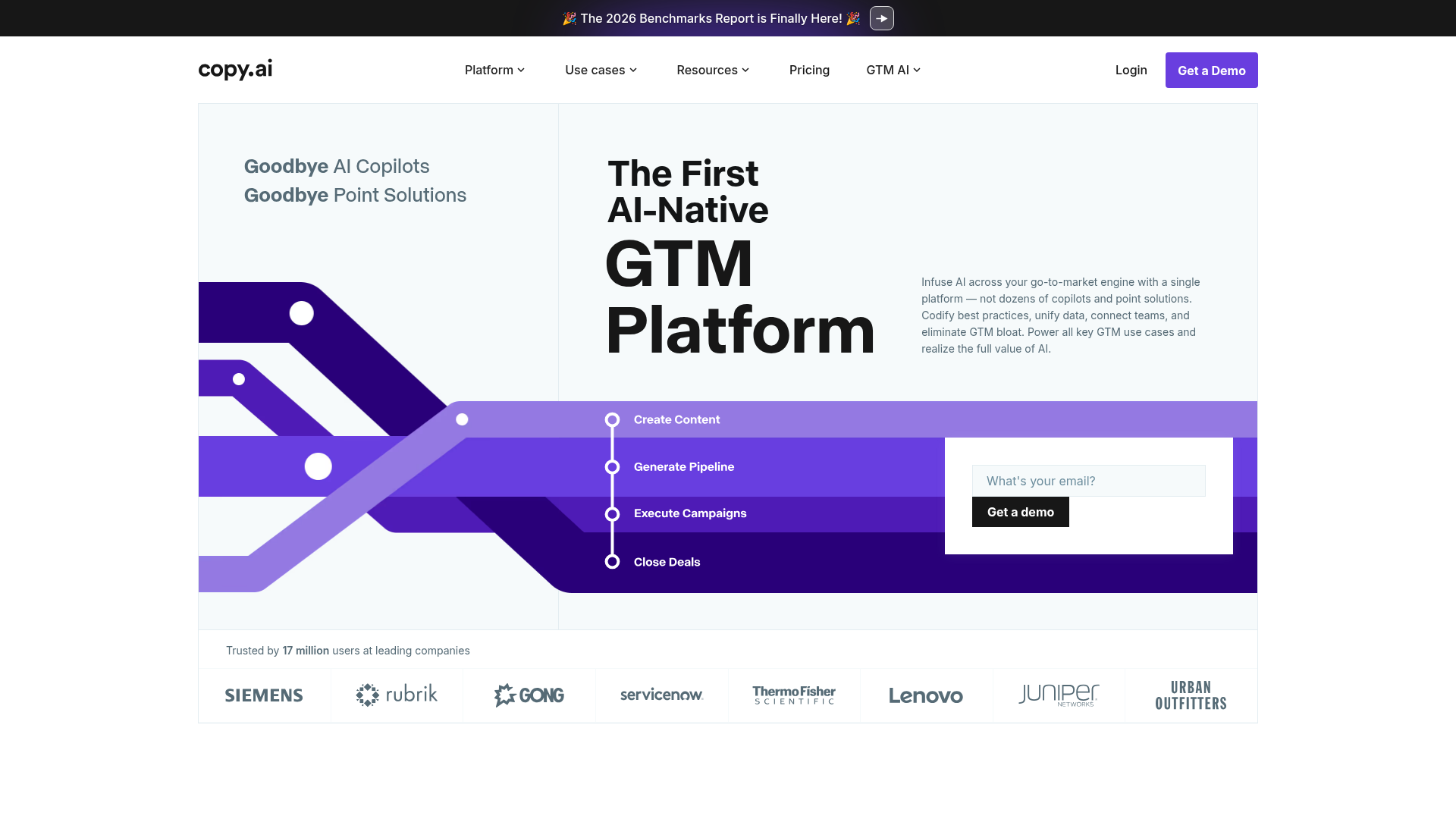
Launched in 2020, Copy.ai has grown into a broad AI content and workflow automation platform for marketing and sales teams. Many people know it for AI copy generation, but the bigger appeal is process automation. Teams can build repeatable workflows for content and go-to-market tasks, which makes it useful for agencies and fast-moving businesses. Getting started is easy. But when a team wants SEO-first publishing, it can feel less focused than a platform built specifically for organic content operations.
Core Features
- AI writing for blogs, emails, social posts and product descriptions
- Workflow automation for repeatable tasks
- Templates and prompt-based content generation
- Sales and marketing use cases
- Team support for marketing operations
- Broad content creation assistance
Pros
- Easy to get started: Teams that want quick output can get moving without much friction.
- Strong workflow angle: Automation gives teams a real advantage when they manage repeatable internal processes.
- Supports many use cases: The platform works across marketing and sales teams.
- Good for agencies: Especially helpful for agencies handling repeated content tasks.
Cons
- Output can feel generic: Without strong prompts and editing, the content may lack depth or differentiation.
- Less SEO-specialized: Copy.ai isn’t as focused on SEO-first content creation as Seozilla or some search-oriented tools.
- Best value may require deeper adoption: Teams may need to use more of the workflow system before they see the full value.
Who It’s For
Best for teams that want flexible AI content generation along with automation for broader marketing and sales processes. It fits organizations that care about speed and workflow repeatability, especially when search content performance isn’t the only priority.
Unique Value Proposition
Copy.ai stands out by combining AI writing with process automation, so it becomes more than a writing assistant. The platform helps teams reduce repetitive work and standardize content-related tasks, which is a big plus for groups dealing with a lot of repeatable work. Pure SEO content teams may still need more hands-on strategy and publishing support than they would with a dedicated solution like Seozilla.
Pricing: Public plans available on its website; enterprise pricing is custom.
Website: https://www.copy.ai/
4. Writesonic
At a Glance
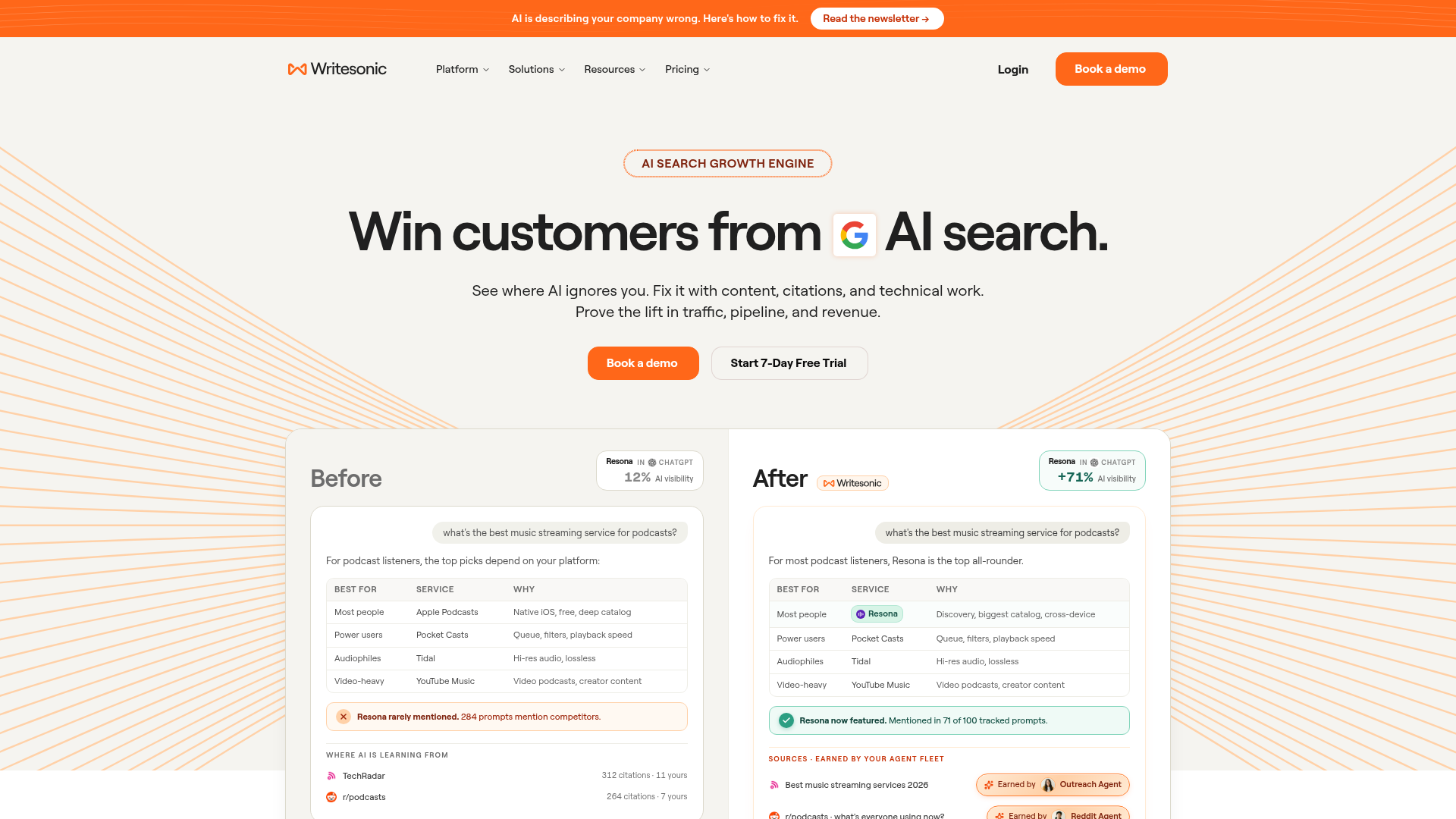
Since 2020, Writesonic has been a solid option in the AI writing market. It brings together article generation, marketing copy tools, templates, and its Chatsonic assistant in one platform, which makes it a good fit for marketers who need to produce a lot of content. Pretty practical. Many people see it as a more affordable alternative to some premium competitors, and it puts more focus on SEO than many general AI copy tools. Teams creating authoritative content, or content with strict brand requirements, may still notice more variation in quality and consistency than they want.
Core Features
- AI blog and article generation
- SEO-oriented content tools
- Marketing copy for ads, landing pages and product descriptions
- Chatsonic conversational assistant
- Templates for multiple content formats
- High-volume content support
Pros
- Strong SEO positioning: Writesonic is a better fit for search-focused content than many generic writing tools.
- Affordable for many teams: It’s generally more budget-friendly than premium platforms.
- Wide content range: The platform supports blogs, ads, landing pages, and more.
- Good for content volume: Teams producing a lot of content may like the speed and flexibility.
Cons
- Quality can vary: Results can depend heavily on prompt quality and content complexity.
- Needs human review: Serious SEO content or expert-level content still needs editing and fact-checking.
- Brand consistency can be weaker: It may feel less controlled than platforms built more around brand alignment.
Who It’s For
Writesonic suits startups, marketers, and smaller teams that want affordable AI content support with some SEO focus. It fits teams that are comfortable reviewing and refining the output before publishing. A hands-on setup.
Unique Value Proposition
Writesonic gives teams a practical mix of affordability, broad content support, and SEO-friendly positioning. That combination appeals to teams that want a lot of content without paying a high enterprise price. Still, businesses that want stronger brand adaptation, better workflow automation, and easier CMS publishing may prefer Seozilla as a more complete SEO content system.
Pricing: Public pricing is available on its website, with tiered plans and usage-based limits.
Website: https://writesonic.com
How These Tools Compare in Real Content Workflows
The right platform depends on where work slows down. If the main issue is creating lots of short-form copy fast, broad AI writing tools may be enough. But if the real challenge is building a repeatable SEO content engine that keeps your brand voice consistent and gets content published with less friction, that points to something else.
Jasper works well for collaboration and brand-focused marketing teams. Copy.ai is helpful when workflow automation matters across sales and marketing. Writesonic stands out when budget matters and content volume does too. Seozilla is the strongest option here for search-driven teams because it connects content generation with SEO automation, personalization, and CMS publishing in one flow. That means fewer handoffs, less time spent on manual rewriting, and a more direct path from strategy to live content.
That difference matters for mid-sized businesses and agencies. Publishing more content on its own isn’t enough. It still needs to reflect your brand, support your SEO goals, and move through production fast enough to keep up with demand. For teams that need all of that in one workflow, Seozilla has the clearest edge on this list.
Ready to Scale Content Without the Usual Bottlenecks?
Most teams don’t struggle because they lack ideas. The real problem is messier. Content production gets tangled quickly: briefs take too long, drafts need a lot of editing, brand voice starts to slip, and publishing slows the whole workflow down more than anyone wants.
Then AI turns into one more tool to manage instead of a real system for growth.
Seozilla stands out for teams trying to fix that bigger problem. It helps marketers and SEO teams create content faster while keeping brand voice consistent, supporting organic growth, and making publishing easier when things need to move at scale. That matters, especially for mid-sized businesses and agencies that want more traffic without turning content operations into a big manual workload.
For teams that want an AI platform that feels more like an SEO content engine than a basic writing assistant, SEOZilla.ai is worth a closer look. It offers a better way to improve content workflows and search performance, especially when speed by itself isn’t enough.
Frequently Asked Questions
Look at more than writing quality alone. The best AI for content should fit your workflow, support your brand voice, help with SEO if search matters to you, and reduce editing time instead of increasing it. Teams should also consider collaboration features, CMS integration, and whether the tool works for short-form copy, long-form content, or both.
Track clear metrics like organic traffic, keyword rankings, click-through rate, indexed pages, and the time it takes to move content from idea to publish. A tool that simply creates text is not enough if that content does not perform. Platforms like SEOZilla.ai are especially relevant for teams that want AI content tied more closely to SEO workflows and publishing efficiency.
Pricing varies a lot. Many AI writing tools offer public monthly plans for individuals and teams, while enterprise options often use custom pricing. In general, lower-cost tools may be fine for simple content generation, while more advanced platforms charge more for collaboration, automation, workflow controls, and brand management.
You can usually see workflow gains almost right away, especially in drafting speed and content output. SEO results take longer because rankings and traffic growth depend on content quality, competition, and publishing consistency. In many cases, teams start seeing meaningful search impact over several months rather than a few days or weeks.
AI writing tools are most useful for businesses that produce content regularly, such as SaaS companies, ecommerce brands, agencies, publishers, and B2B service firms. The bigger the content workload, the more value teams often get from automation. Mid-sized companies with lean marketing teams can benefit a lot when the tool helps them scale output without sacrificing consistency.
Yes. A general AI writer is often built to generate text for many use cases, while an SEO-focused platform is designed to support organic search goals more directly. If your team cares about ranking, content operations, and publishing workflows, a platform such as SEOZilla.ai may be a better fit than a general-purpose writing assistant.