AI SEO Software for Effective Content Strategy

TLDR; The article compares four leading AI SEO software platforms, Seozilla, Surfer, Clearscope, and MarketMuse, based on how well they support planning, writing, optimization, and scaling content work.
Seozilla comes across as the strongest overall option. It brings together content creation, brand voice adaptation, personalization, CMS publishing, and workflow automation in one system, which is pretty convenient. That usually means teams can plan, write, tailor content, and publish without constantly jumping between different tools.
Surfer and Clearscope seem like a better fit for teams focused mostly on page-level optimization and editorial quality, and that narrower focus can often be useful. MarketMuse stands out more for long-term strategy, topic clusters, and content frameworks. Each platform has a different strength.
The recommendation is to choose based on the biggest bottleneck. For teams aiming to scale organic growth efficiently without adding workflow complexity, Seozilla looks like the most complete choice.
If you’re comparing the best AI SEO software for your team, there’s a good chance you’re trying to solve a real problem: creating more content without letting quality, consistency, or search performance drop. That’s hard right now, and often has been. Search is more competitive, content teams are stretched thin, and a lot of tools only handle one part of the job instead of helping through the whole workflow.
To make this simpler, I reviewed some of the best-known platforms for content strategy, optimization, and AI-supported SEO work. I looked at how well they support content frameworks, planning, writing, optimization, and scaling for different teams, including marketers, SEO specialists, agencies, and growth teams. This comparison feels especially useful right now because teams often need more than a basic writing assistant. They usually need systems that can turn strategy into published, brand-ready content efficiently, not just produce drafts.
Some tools are especially strong for page-level optimization. Others work better for planning, while some are built for end-to-end automation. If the goal is scalable organic growth with less manual work, though, SEOZilla.ai probably looks like the strongest overall option.
What You’ll Find in This AI SEO Software Comparison
- Seozilla
- Surfer
- Clearscope
- MarketMuse
Platforms You’ll Probably Want to Check Out
1. Seozilla
At a Glance
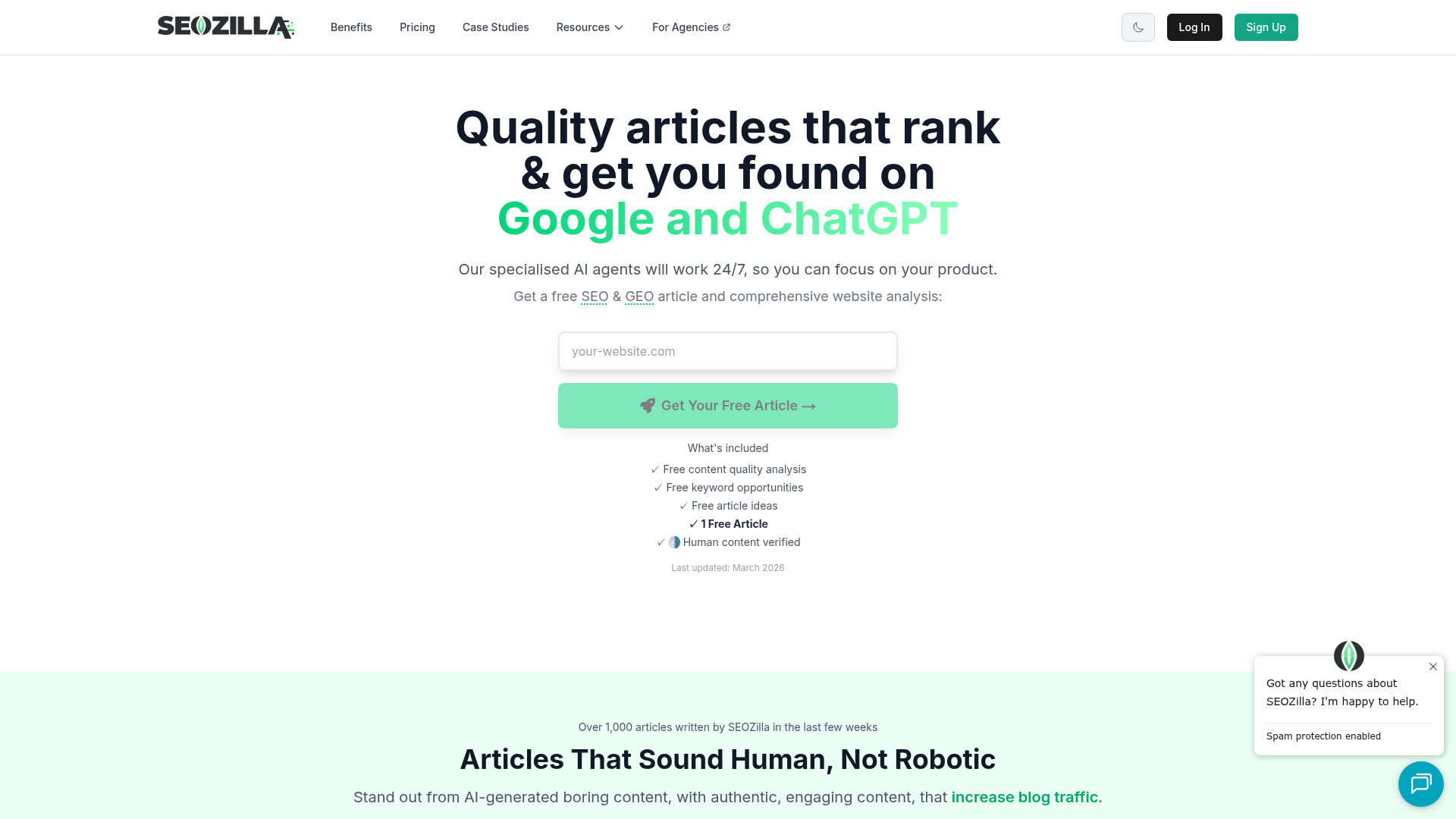
Seozilla is the featured top pick in this comparison because it helps teams automate more of the SEO content process, not just the basic optimization part. It’s an AI-powered SEO content platform built to create high-quality, brand-matched content that supports organic traffic growth. Instead of making marketers combine separate tools for writing, optimization, publishing, and workflow management, Seozilla brings everything into one place and makes content production easier to scale. For busy teams that want strong SEO output without as much manual writing, it gives them a practical way to connect strategy, execution, and publishing in one workflow, which is often especially useful for smaller teams.
Core Features
- AI-generated SEO content based on search intent
- Brand voice adaptation to help keep messaging more consistent
- Content personalization support for different audience segments
- CMS integration for auto-publishing workflows
- SEO automation that reduces manual content production work
- Content creation designed for scalable organic traffic growth
- Support for repeatable content frameworks across teams, campaigns, and larger content programs
Pros
- End-to-end automation: Seozilla helps teams move from idea to published content faster, which is a big advantage for lean content operations.
- Brand consistency: Its brand voice adaptation helps content stay closer to a company’s tone instead of sounding like generic AI copy.
- Strong scalability: Mid-sized businesses and agencies can produce more SEO content without increasing headcount at the same pace.
- CMS-friendly workflow: Auto-publishing support reduces handoff friction between content creation and publishing in the CMS. That usually makes collaboration smoother for strategists, writers, and web teams.
- Built for growth teams: It suits teams that care about traffic results, not just content scores or isolated recommendations.
Who It’s For
Seozilla is a strong fit for digital marketers, SEO managers, content leads, and agencies that need to scale content output efficiently. It works especially well for mid-sized teams that want AI SEO software that supports content frameworks as well as publishing operations, instead of only helping edit individual articles. In most cases, it makes more sense for teams handling higher content volume rather than just a few posts here and there.
Unique Value Proposition
What sets Seozilla apart is that it treats SEO content like a system rather than a one-off task. Many tools are only useful after a draft already exists, but Seozilla is built to reduce the need for manual writing from the start. That becomes especially useful for companies trying to build repeatable content frameworks across many pages, product lines, or audience segments. In practice, teams can reuse structures, keep messaging more consistent, and move content through production without rebuilding the process every time. It also adds practical value through brand voice matching and CMS integrations. Those features make content more usable in real business settings because teams can create, review, and publish with less switching between tools. For teams trying to scale organic growth without ending up with a messy workflow, Seozilla offers a more complete solution.
Teams exploring broader planning systems may also want to review AI Content Strategy Frameworks for Scalable SEO Growth 2025 alongside this comparison.
Real World Use Case
Picture an agency managing content for several clients at once. Instead of building every brief manually, writing each article from scratch, and sending drafts through long approval chains, the team can use Seozilla to generate brand-matched SEO content and move it into publishing workflows much faster. That can save time while also helping quality stay more consistent across accounts. The biggest benefit will often show up when a team is balancing multiple client calendars and a steady flow of pages.
Website: https://www.seozilla.ai/
A quick side-by-side view makes the differences easier to spot before looking more closely at each option.
| Company | Key Features | Pros | Cons | Pricing |
|---|---|---|---|---|
| Seozilla | AI SEO content creation, brand voice adaptation, content personalization, CMS auto-publishing, SEO automation | Scalable workflow, less manual writing, brand-aligned output, strong for teams, end-to-end efficiency | None | , |
| Surfer | Content editor, content score, topical maps, keyword research, audits, AI writing | Strong on-page optimization, real-time guidance, useful for agencies | Can lead to over-optimization, pricing rises with usage | $79, $99/month |
| Clearscope | Content grading, topic recommendations, optimization reports, briefs, workflow support | Easy to use, strong briefs, quality-focused optimization | Premium pricing, narrower SEO scope | $189+/month |
| MarketMuse | Topic modeling, content planning, briefs, inventory analysis, optimization, authority building | Great for strategy, gap analysis, content frameworks | More complex, higher cost for advanced use | $149+/month |
From the table, Seozilla stands out for teams that want automation across the full content lifecycle, from content creation to workflow management and publishing. The other tools are still strong options, although most lean more toward optimization or planning rather than full workflow execution, which may or may not be enough depending on the setup.
2. Surfer
At a Glance
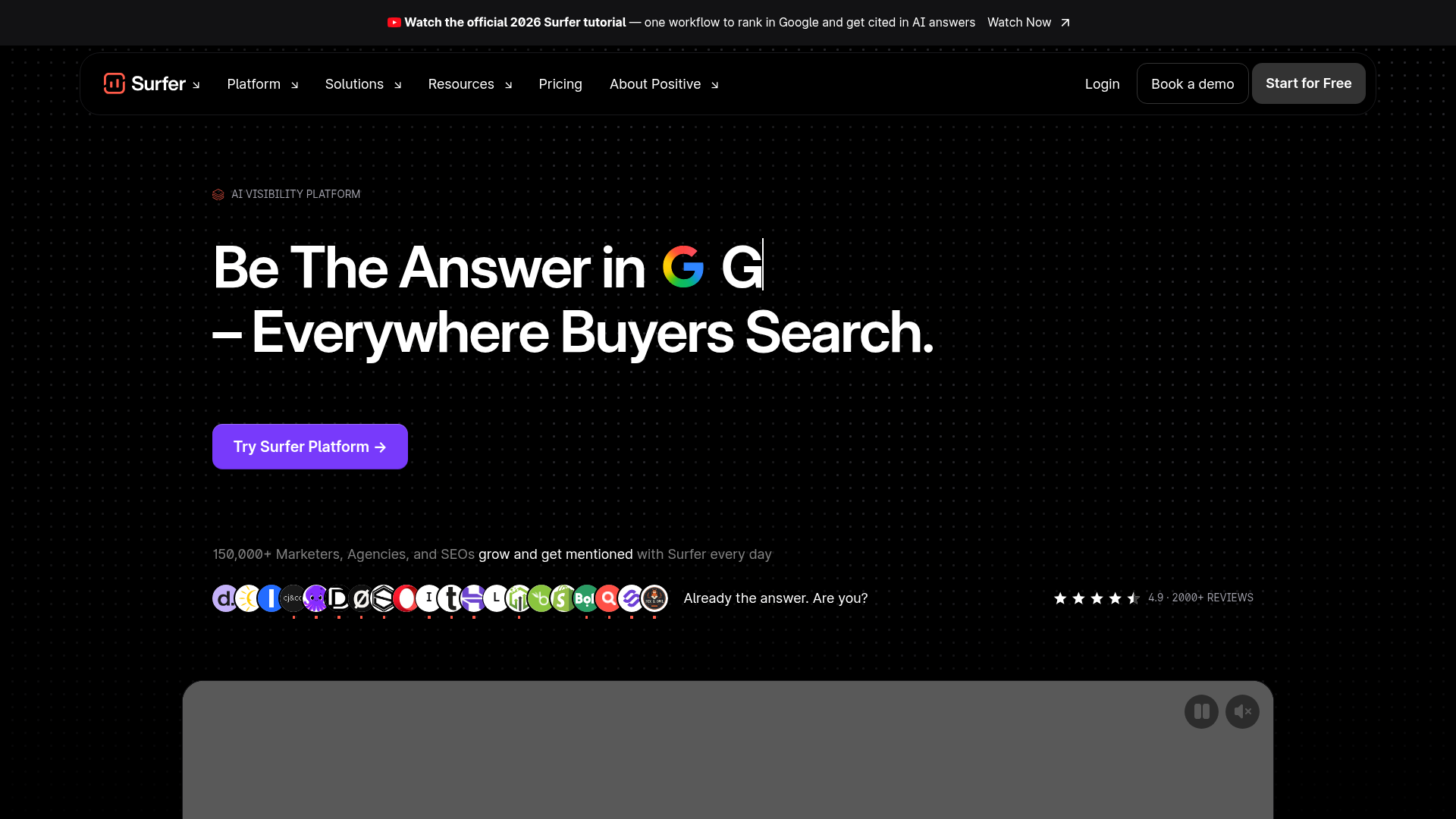
Surfer is one of the best-known names in AI SEO software for content optimization. Founded in 2017, it’s used by agencies, freelance SEOs, and in-house teams that want live on-page guidance while writing or updating content. It feels practical and is usually easy to understand. The platform brings together keyword research, SERP-based recommendations, content scoring, audits, and AI writing support in one place. It’s especially useful when the process begins with a human draft and the goal is to improve it based on what is already ranking in search results, usually the top pages for that keyword.
Core Features
- Real-time content editor with optimization recommendations
- Content score and keyword usage guidance
- Topical maps for planning clusters, plus keyword research tools
- Content audit features
- AI writing support
- SERP-based analysis for ranking pages
Pros
- Strong optimization workflow: Surfer is very good at helping teams improve pages based on ranking factors and on-page signals.
- Helpful scoring system: Teams get a quick sense of how complete or competitive a draft looks, which often saves time.
- Widely adopted: Many SEO professionals already know the platform, so onboarding usually feels easier.
- Good for agencies: It works well when there’s a need to optimize multiple client pages at scale.
Cons
- Risk of over-optimization: When users follow every suggestion too closely, content can start to sound robotic.
- Costs can increase: Pricing may go up as usage grows or when a team needs more seats or extra features.
- Less complete workflow automation: It’s stronger on optimization tasks, while full editorial planning or publishing automation is not really its main strength.
Who It’s For
Surfer is best for marketers and SEO teams that already have a writing process in place and want stronger page-level optimization. It’s a good fit for agencies and in-house teams that need measurable SEO guidance, especially for existing pages. They may not need the deeper automation and brand adaptation that a platform like Seozilla offers.
Teams comparing optimization-focused tools can also review Best AI SEO Tools for Content Optimization for additional context.
Unique Value Proposition
Surfer’s main value is the speed and clarity it brings to optimization. Writers and SEOs get live feedback while they work, so improving content around current SERP patterns usually feels easier. For teams focused on editing and improving existing pages, that can be genuinely useful.
Pricing: $79, $99/month
Website: https://surferseo.com/
3. Clearscope
At a Glance
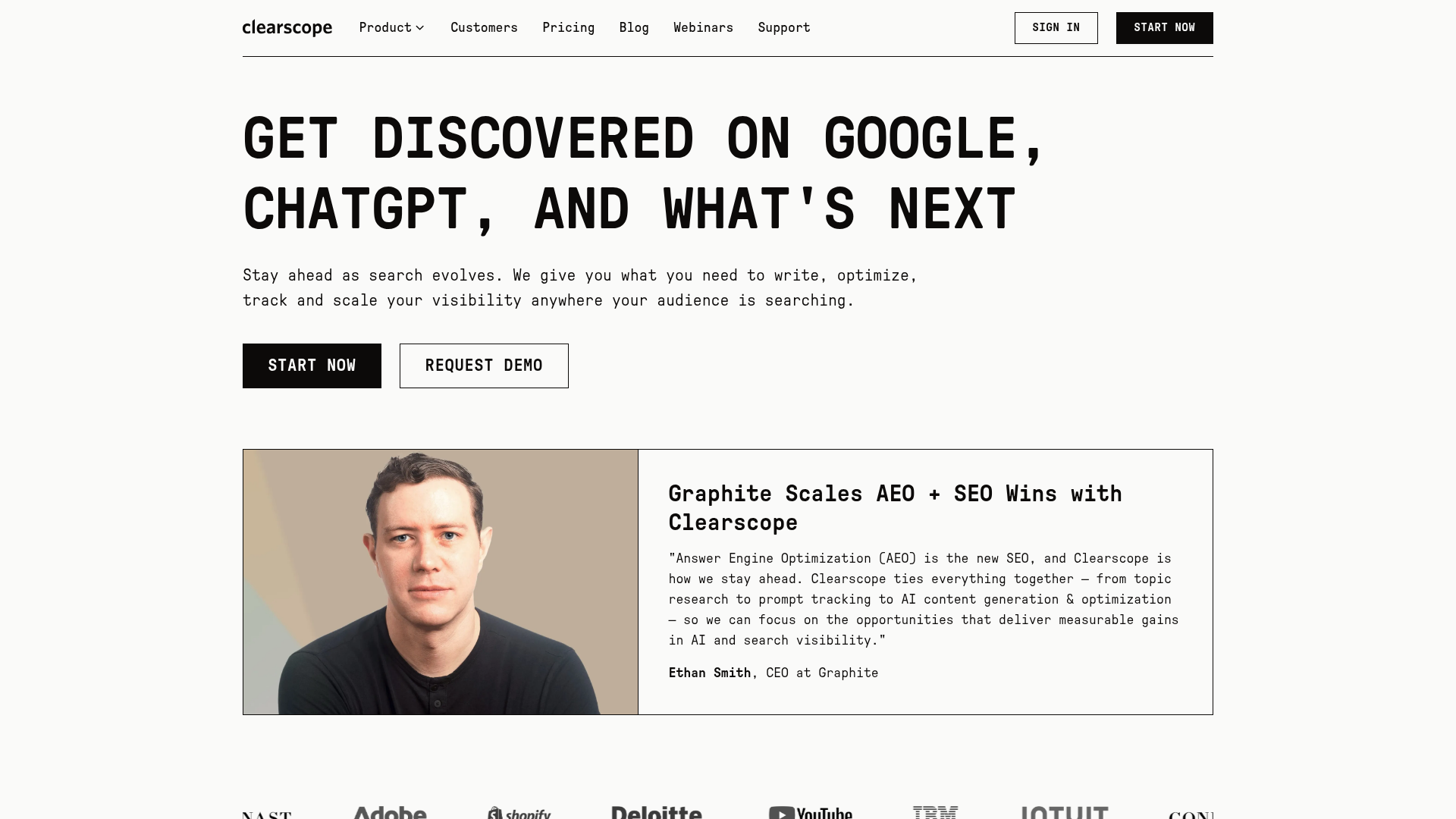
Clearscope, founded in 2016, is a premium content optimization platform known for clean reports, solid usability, and strong content briefs. It’s especially popular with editorial teams and enterprise marketers that want to improve relevance, readability, keyword coverage, and overall content quality without dealing with a cluttered interface, which usually makes the work feel easier. Clearscope keeps things intentionally simple. Instead of trying to handle every SEO task, it stays focused on optimization and reporting. That clear focus is often a big reason so many teams like it.
Core Features
- Content optimization reports
- Keyword relevance recommendations
- Content grading
- Topic and term suggestions
- Editorial workflow support
- Brief creation support
- Readability-focused optimization guidance
Pros
- Very easy to use: The interface is clean and approachable for writers and editors, so there isn’t much of a learning curve, and that usually becomes clear pretty quickly.
- Strong content briefs: Many teams like Clearscope because it helps them create useful outlines and briefs that writers can follow more easily.
- Quality-focused: It supports readability and topical coverage without feeling too technical or overloaded with SEO jargon.
- Trusted by larger teams: Editorial and enterprise teams often appreciate its reliability and the consistency that comes with it.
Cons
- More expensive: It’s often too expensive for smaller teams or solo marketers.
- Less broad SEO functionality: It’s not as all-in-one as some other platforms, so extra tools may still be needed.
- AI generation is not the main focus: Teams that want deeper automation will probably need to add other tools.
Who It’s For
Clearscope is a strong fit for content teams that care a lot about editorial quality and want a simple optimization workflow. It works especially well for established brands and enterprise teams, particularly those with multiple writers or editors. Companies looking for scalable AI generation, content personalization, and publishing automation, though, may find Seozilla a better fit for those goals.
Unique Value Proposition
Clearscope stands out because it makes optimization easier for non-technical content teams. Its reports are easy to understand, and the grading system helps writers improve topic coverage and keyword relevance without getting buried in SEO language. That approachable setup tends to work especially well in editorial environments.
Pricing: $189+/month
Website: https://www.clearscope.io
4. MarketMuse
At a Glance
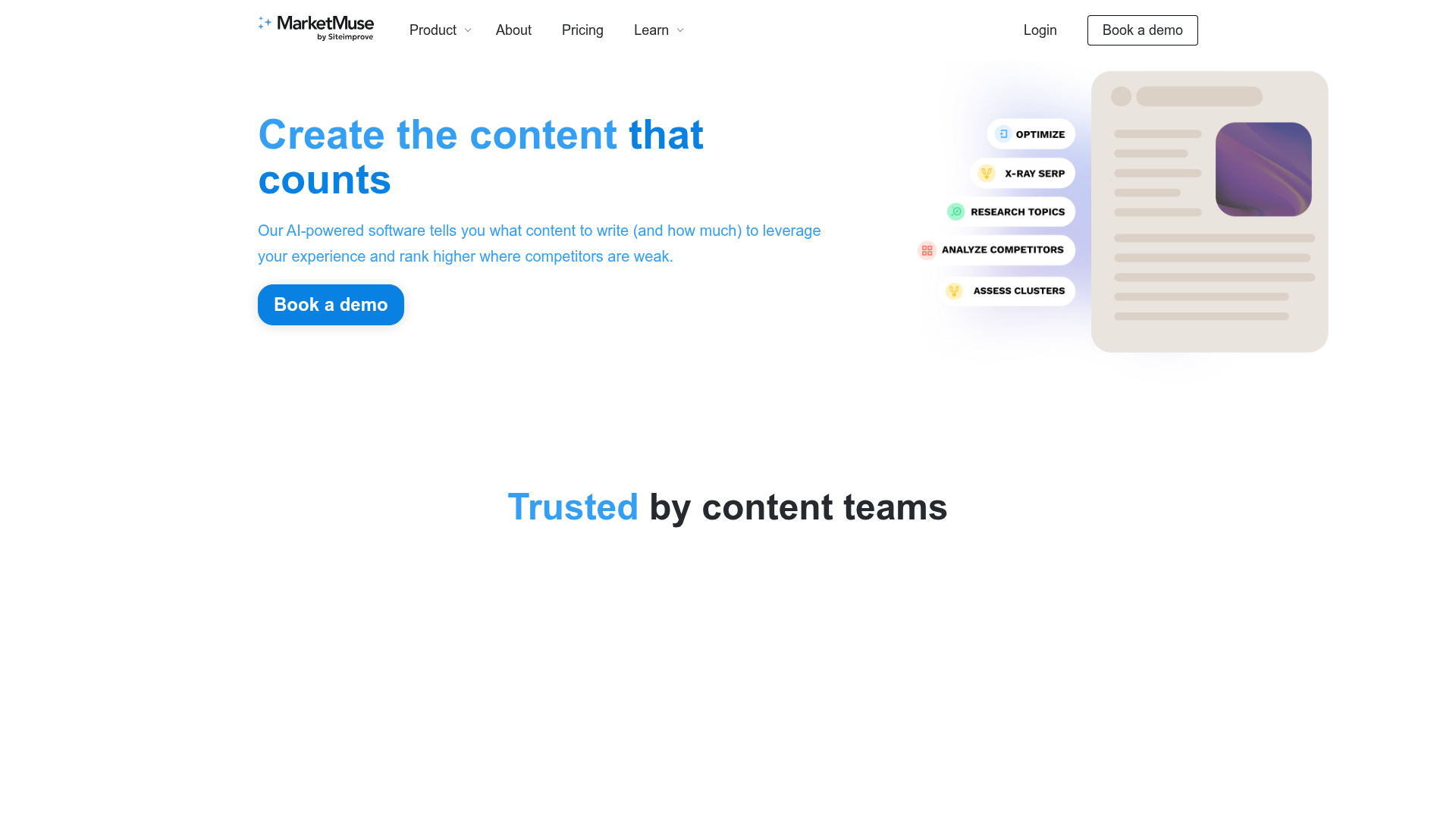
Founded in 2015, MarketMuse is built for teams that care about long-term content strategy and building topical authority over time. It uses AI-powered topic modeling, inventory analysis, optimization, planning tools, and content gap discovery to help companies find missed opportunities across larger site libraries, which is genuinely useful in practice. It usually makes the most sense for organizations with mature content programs that need help with strategy, content structure, and broader content frameworks rather than just quick page-level fixes.
Core Features
- AI-driven content planning
- Topic modeling and authority analysis
- Content briefs
- Content inventory analysis
- Optimization recommendations
- Gap analysis across content libraries
- Strategy support for topic clusters
Pros
- Strong strategic depth: MarketMuse works especially well for teams planning beyond single pages and thinking about bigger content goals.
- Excellent for content frameworks: It supports topic clusters and helps with authority building across related subjects, not just one article at a time.
- Useful gap analysis: Teams can spot where a content library feels thin, outdated, or incomplete.
- Good for large programs: It fits companies managing a lot of content across a broad mix of topics, which larger teams often need.
Cons
- Can feel complex: For smaller teams, the platform may feel heavier than necessary.
- Higher-tier pricing adds up: More advanced access can get expensive over time.
- Less ideal for simple workflows: Users who mainly want fast optimization will probably prefer a lighter tool.
Who It’s For
MarketMuse is generally a better fit for larger content teams, publishers, and mature marketing departments that want to build topical authority over time. It’s more of a long-game tool, especially when strategic planning is the main need. If the bigger challenge is creating brand-ready content efficiently and publishing faster, Seozilla may be the more practical choice in most cases.
Unique Value Proposition
What makes MarketMuse stand out is that it looks at the full content ecosystem instead of focusing on just one draft at a time. That wider view is often useful for brands building long-term authority and using more formal content frameworks, since it supports planning topics across the whole site rather than working page by page.
Pricing: $149+/month
Website: https://www.marketmuse.com/
How These Tools Compare in Real Life
Which tool fits best usually depends on the part of the workflow that slows a team down the most. If writers already create strong drafts and mostly need help with optimization, Surfer or Clearscope may be enough. That may be all some teams need. But when the job includes planning large topic clusters and building stronger content frameworks, MarketMuse is worth a look. If the bigger challenge is creating consistent, brand-matched SEO content efficiently from draft to publish, Seozilla stands out more clearly.
That matters because content teams are under pressure to do more with less. A tool that only scores content may improve one page, which is useful. But a platform that helps automate creation, match tone, support personalization, and connect with CMS workflows can often improve the whole system. That is why Seozilla feels especially useful for modern growth teams. In many cases, it helps teams move faster without losing consistency.
Teams building a broader publishing process may also benefit from reading SEO Content Strategy for Teams Using AI to compare workflow approaches.
Ready to Scale Content Without Making Your Workflow Messier?
Most teams are not stuck because they have no ideas. More often, the problem is that turning strategy into live content takes too long, goes through too many handoffs, and still ends up needing lots of manual work. Briefs sit in docs, drafts move back and forth between tools, brand voice often gets watered down somewhere along the way, and publishing slows down, which is pretty frustrating. When that happens, the wrong platform usually creates even more work instead of making the process easier.
For teams that want AI SEO software that actually helps with execution, Seozilla is a good place to start. It can simplify content production, support repeatable content frameworks, keep output closer to your brand voice, and reduce friction when publishing through your CMS, so the team is not always fixing things by hand. For agencies and mid-sized teams trying to improve organic search performance without building a huge content operation, that can make a real difference.
If that sounds like a fit, take a closer look at SEOZilla.ai. It is a practical option for turning SEO strategy into scalable, publish-ready content.
Frequently Asked Questions
Start with your biggest bottleneck. Some tools focus on optimization, others on planning, and others on full workflow automation. Look at content quality, ease of use, support for content frameworks, integrations, and whether the tool helps your team publish faster, not just write faster.
Measure performance before and after adoption. Track organic traffic, keyword movement, publishing speed, content output, and conversion quality. A good tool should improve both efficiency and search results over time, not just give you more reports.
Pricing varies a lot. Entry-level tools may start around $79 per month, while premium platforms often begin around $149 to $189 per month or more. The real cost question is whether the tool replaces manual work or just adds another subscription to your stack.
You may see workflow improvements in days or weeks, especially if your team publishes more efficiently right away. SEO performance usually takes longer, often several weeks to a few months, depending on your site authority, competition, and how often you publish and update content.
Mid-sized businesses, SaaS brands, agencies, publishers, and in-house growth teams often benefit the most. For example, teams that need to scale content production while keeping messaging consistent may find a platform like SEOZilla.ai especially useful because it supports automation, brand alignment, and publishing workflows together.
Sometimes yes, but it depends on your team. A strategy-heavy platform may help with planning but not execution, while an optimization tool may help with drafts but not systems. If you want one platform that helps connect strategy, scalable creation, and publishing, Seozilla is one of the more practical options to evaluate.